
A herb corner on the kitchen windowsill is one of the loveliest ways to combine usefulness and beauty. Fresh basil for your pasta, chives on your morning bread, fragrant rosemary with roast potatoes – all within easy reach. And when you plant your herbs in a wooden planter and add handmade herb markers, an ordinary window turns into a living, fragrant decoration that feels like home.
Why create a herb corner in the kitchen
The kitchen is the heart of the home, and the window above your sink or worktop often offers ideal conditions for growing herbs – light, warmth and your regular care, because you are there every day. In Czech flats and small kitchens where space is tight, the windowsill is often the only sunny spot worth using.
But herbs in the kitchen are not just a handy supply of fresh seasoning. They are living decorations that smell wonderful, flower and change the kitchen window with the seasons. Unlike cut flowers, they last for weeks or even months, help freshen the air and bring a natural, warm element into a modern kitchen that can often look rather sterile. The combination of greenery and natural wood is also becoming increasingly popular in the Czech Republic – a return to what our grandmothers knew: herbs on the windowsill as a natural part of the kitchen.
If you are looking for inspiration for other rooms too, take a look at AMADEA wooden home accessories, which follow the same rustic style.
🌿 Want to start your own herb corner? At AMADEA you will find handmade wooden planters and herb markers made from Czech wood.
Browse the garden collectionHow to design a herb corner step by step
1. Choose the right window
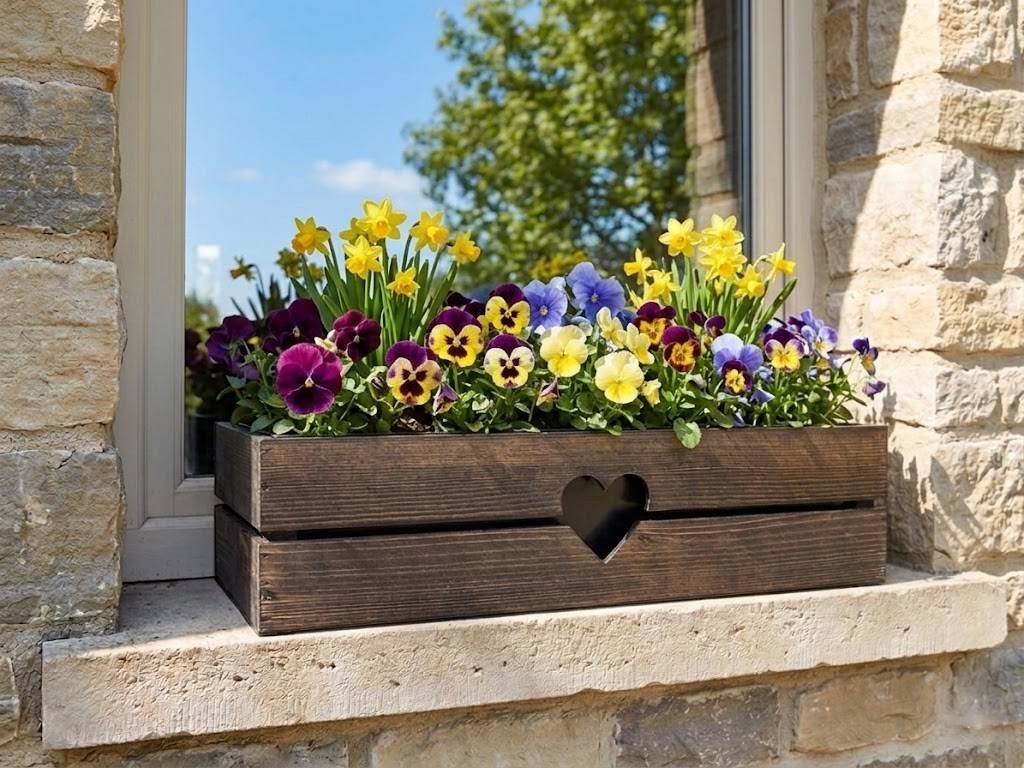
Herbs love the sun, but not the scorching midday heat behind glass. A window facing south, south-east or east is ideal – there is plenty of light in the morning and the plants will not “burn” in the afternoon. If you only have a north-facing window, choose herbs that tolerate partial shade, such as mint, lemon balm or chives. A north-facing window, however, will never suit basil or rosemary – they would weaken.
Consider the practical side too: the window should be close to the hob, but not directly above it. Hot steam and temperature swings do not suit herbs. The ideal distance is 1–2 metres from the heat source, so the herbs get light without being damaged by steam from the pans.
2. Choose matching containers
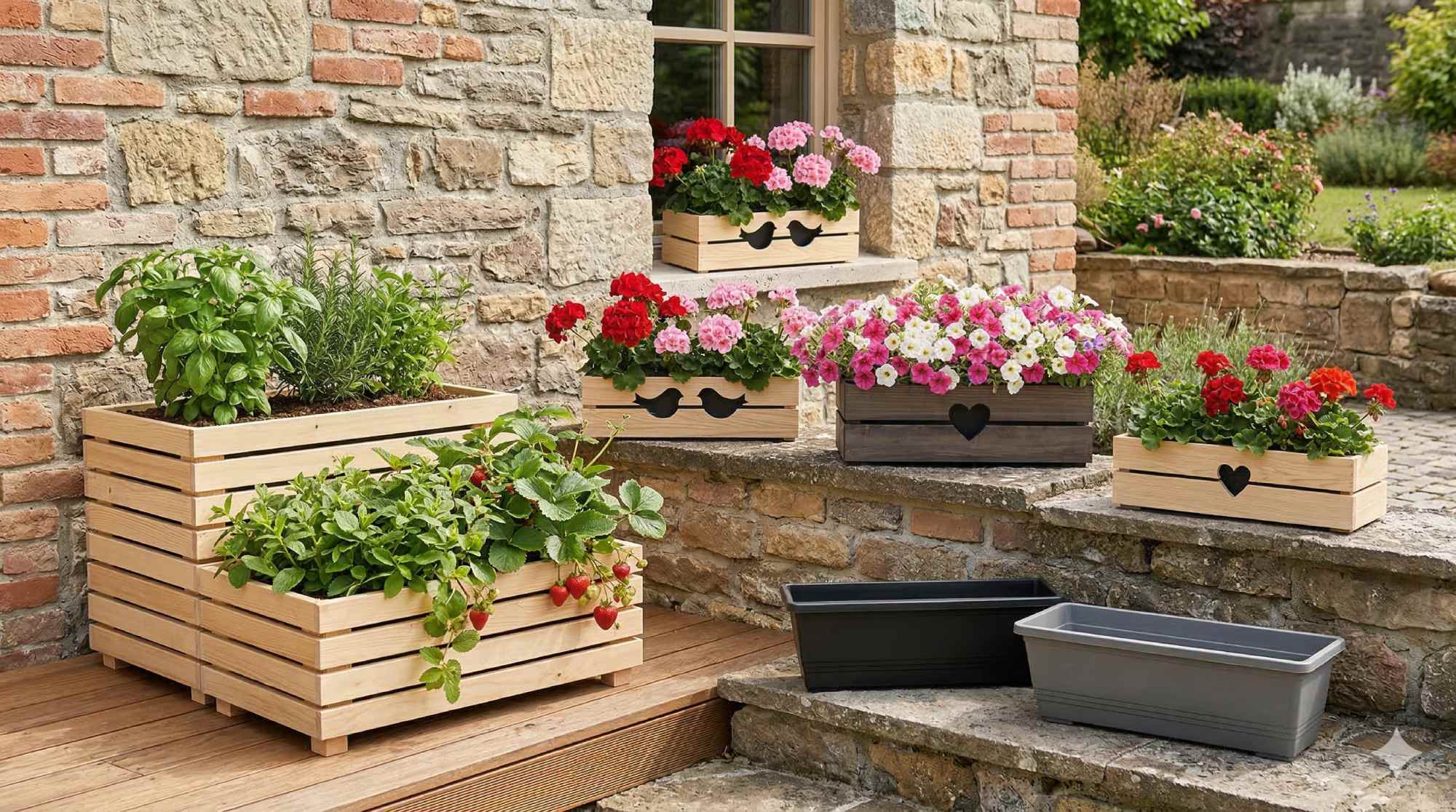
What you grow your herbs in shapes the overall impression just as much as the plants themselves. The most unified and stylish solution is a single wooden planter the width of the window – the herbs look like a miniature garden, the roots have plenty of room and the planter doubles as a decoration. Wood also breathes, regulates moisture and suits a kitchen far better than plastic alternatives.
If you want more flexibility, combine identical ceramic or terracotta pots and stand them in a wooden crate. You get a rustic mini garden that is easy to move, and you can swap individual herbs with the seasons. Take a look at AMADEA wooden flower pots and planters – we make them from Czech wood species and they withstand watering without warping.
3. Label each herb with a marker
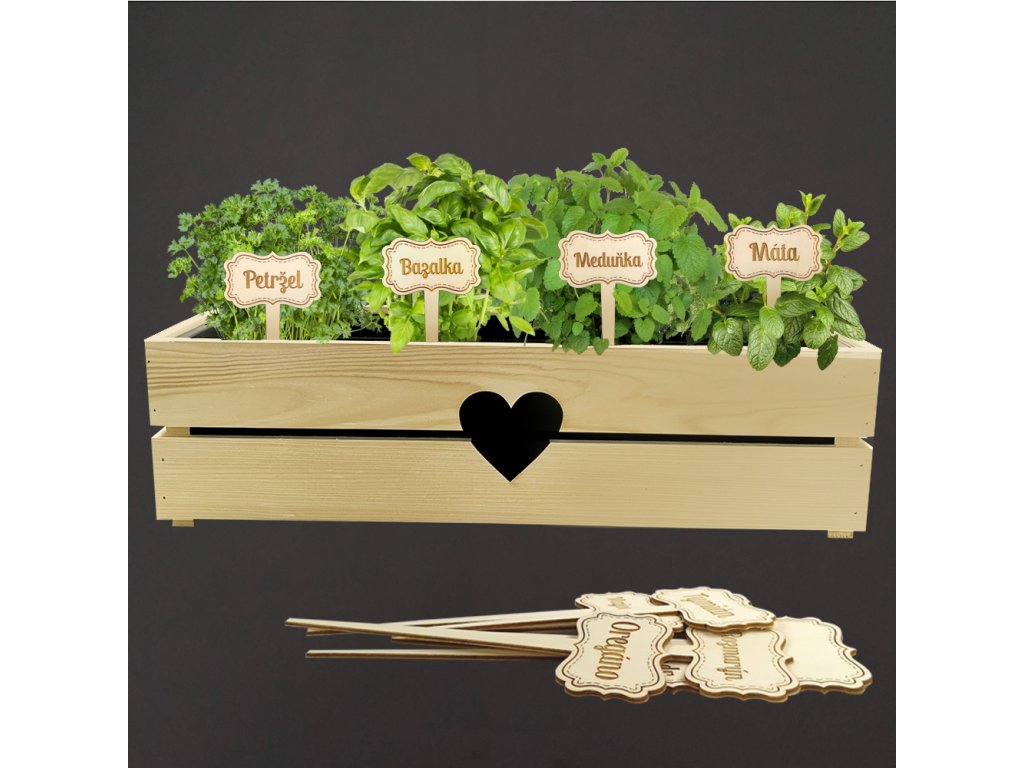
Markers and labels are not just a practical aid for those who cannot remember where the thyme grows and where the oregano is. They are small details that turn randomly planted herbs into a thoughtfully designed corner. Handmade wooden herb markers and labels with a burnt-in name create a unified rustic style and work just as well in a modern kitchen as in a country cottage.
If you have children, get them involved in labelling and planting – herbs are an ideal way to show them naturally where food comes from. The labels then become their own little project they can be proud of.
4. Choose the right herbs
For beginners we recommend five classics: basil, chives, parsley, thyme and rosemary. All of them cope with kitchen warmth, grow quickly and are useful in everyday cooking. Once you have seen how well they do on your windowsill, add mint (ideal for tea and cocktails), oregano for pasta and lemon balm with its calming effects.
Think about the seasons too. In spring, basil and coriander are easy to raise from seed; in summer, plant thyme and oregano; in autumn and winter you will appreciate perennial herbs such as rosemary and sage, which keep their green leaves even as the days get shorter.
5. Complete the corner with practical helpers
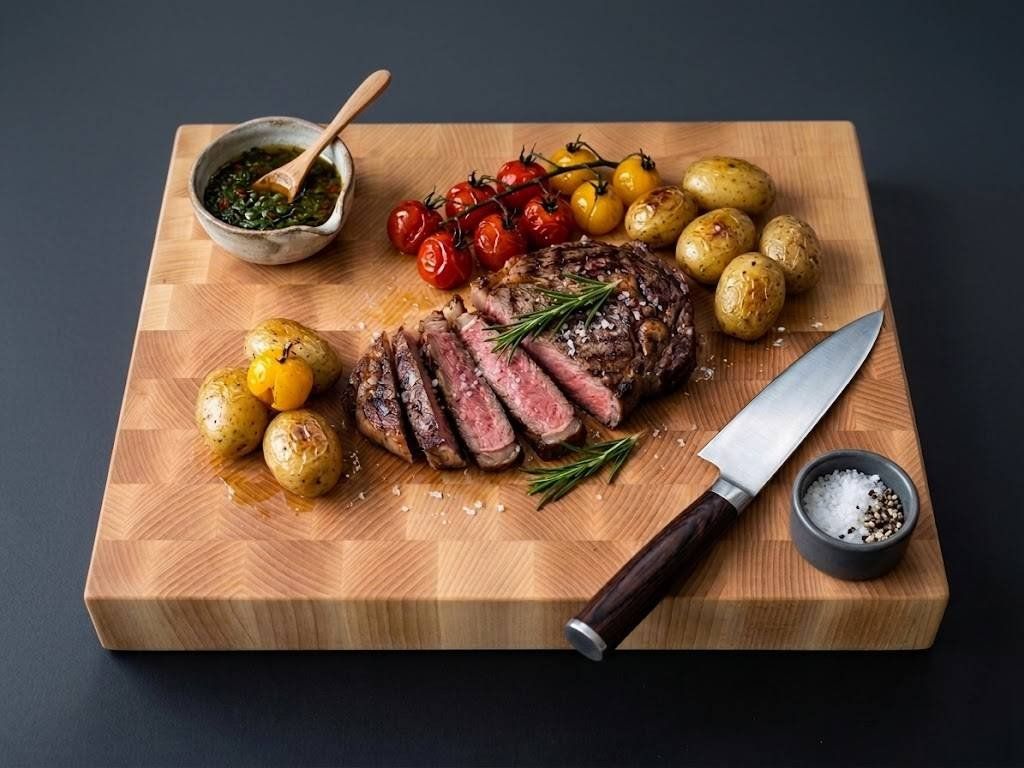
A herb corner is not complete without the tools that make it a living part of your kitchen. Small garden scissors, a watering can and, above all, a wooden chopping and serving board on which you can chop freshly snipped chives straight away. Add a wooden bowl for drying or a wooden tray for moving the whole arrangement if you want to bring the herbs to the table while cooking.
💡 A tip from AMADEA: If you want your herb corner to look like something out of a design magazine, stick to the rule of three materials: wood (planter, markers, board), ceramics (an extra pot) and metal (watering can, scissors). More materials start to look visually busy and you lose the sense of a calming spot.
The AMADEA herb corner – everything you need
How to match your herb corner to your kitchen style
| Kitchen style | Recommended planter | Herbs that fit |
|---|---|---|
| Country / rustic | Solid wooden planter with visible grain | Thyme, sage, rosemary, lavender |
| Scandinavian minimalism | Light wooden planter with clean lines | Basil, chives, parsley |
| Modern with wood | Darker planter or wooden crate with ceramics | Oregano, mint, coriander |
| Cottage / vintage | An aged look, patina, combined with labels | Wild thyme, lemon balm, lovage |
Summary: A successful herb corner on the kitchen windowsill rests on four pillars – enough light, a good-quality wooden planter, the right choice of herbs for the window's orientation and small details such as markers or a tray. When these elements come together, you get a practical supply of fresh seasoning and a living decoration that gives your kitchen soul.
Frequently asked questions about herb corners
Which herbs grow best on a kitchen windowsill?
Basil, chives, parsley, thyme, oregano, mint and rosemary are ideal for a kitchen windowsill. They are undemanding, tolerate the warmth of the kitchen and grow beautifully when trimmed regularly. What matters is a south- or south-east-facing window with plenty of sunlight.
How often should I water herbs on the windowsill?
Water herbs on the kitchen windowsill 2–3 times a week depending on the temperature and season. More often in summer and in a warm kitchen; in winter once a week is enough. Check with your finger – the soil should be slightly moist, never waterlogged. Overwatering is the most common reason herbs die.
What is the best container for herbs on the windowsill?
The most stylish and practical option is a wooden planter made to fit the width of the window. Wood regulates moisture well and suits a kitchen visually. Alternatively, you can use individual pots in a wooden crate or ceramic containers. Each herb should have enough room for its roots.
How can I label individual herbs in a planter?
The prettiest option is wooden herb markers and labels with a burnt-in or engraved name. As well as being practical, they also act as decoration and give the herb corner a unified rustic style. At AMADEA you will find markers handmade from Czech wood.
Which AMADEA wooden products suit a herb corner?
Wooden planters and flower pots, herb markers and labels, wooden trays for serving freshly picked herbs and chopping boards are a perfect fit for a herb corner. All AMADEA products are handmade from Czech wood species and create a cosy, natural atmosphere in the kitchen.
🌱 Get inspired by wooden accessories for the whole kitchen. From herb planters to chopping boards and trays – all handmade from Czech wood.
Browse kitchen accessoriesAuthor: Martin Portych – specialist in wooden products, gift advice and shop content
Editorial policy: Our content is based on the day-to-day practice of the AMADEA shop, the real needs of our customers and a commitment to clear, useful and trustworthy information.