
Do you know how many years an oak needs to grow into the kind of tree you like to rest under? The growth rate of trees is a fascinating subject that reveals the secrets of every ring hidden in the wood. Growth rings are nature's archive – from them we can read a tree's age, years of drought and stormy seasons. Play our interactive quiz and find out how well you know Czech trees and the pace of their lives.
🌳 Quiz: how fast do trees grow?
Test your knowledge of growth rings, annual increments and the wood properties of Czech forests. Choose a difficulty level and off you go!
🌳 Looking for a gift made of natural wood? At AMADEA you will find handmade products from Czech forests – from decorations to kitchen accessories.
Visit AMADEAA guide to the growth rates of Czech trees
Every tree grows at its own pace. It depends on the species, the site, the amount of light and water, and the temperature. Below you will find a detailed overview of the six most common trees of Czech forests – from the slow oak to the speedy spruce.
Pedunculate oak – Quercus robur

The pedunculate oak is one of the slowest-growing but also longest-living trees of Central European forests. In its first decades it grows only 30–50 cm a year in height, and its trunk diameter increases by just 3–5 mm a year. It reaches its full stature only at around 100 years of age – by then it can be more than 25 metres tall with a trunk girth of over 2 metres.
Slow growth has its rewards, though: the growth rings are dense and narrow, and the wood is exceptionally hard and resistant to moisture and mould. That is why oak is prized for wine barrels, floors and traditional kitchen and serving boards. Archaeologists find oak structures hundreds of years old practically intact.
In Czechia you will find old oaks mainly in the lowlands along rivers – in the Elbe valley, in South Moravia and in the floodplain forests of South Bohemia. The largest specimens in the country are over 500 years old and are protected as natural monuments.
Norway spruce – Picea abies

Norway spruce is the workhorse of Czech forests and one of the fastest-growing native trees. When young (10–40 years) it grows 50–80 cm a year in height; its trunk diameter increases by 8–12 mm a year. On a good site it can be more than 30 metres tall at 60 years of age.
But rapid growth has a downside: the growth rings are wider and the wood is less dense than oak. Spruce wood is light, flexible and easy to work – excellent for building, furniture and musical instruments, but less resistant to moisture. Czech foresters in the Ore Mountains, the Šumava and the Beskydy are now facing the massive dieback of spruce monocultures caused by bark beetles, to which water shortage in dry years contributes greatly.
Spruce growth rings are even and regular, light to medium brown. Spruce wood contains resin canals, which are clearly visible under a magnifying glass.
Scots pine – Pinus sylvestris

Scots pine is a modest pioneer of dry, sandy soils – it grows where other trees fail. Its annual height increment is around 30–60 cm, and its trunk diameter grows by 4–8 mm a year. The growth rate varies greatly with conditions: on the poor sands of the Třeboň or Doksy regions the growth rings are narrow and the wood dense; on fertile soils pines grow faster.
Pine wood is medium-hard, very resinous and, thanks to its resin content, naturally resistant to rot. It is a popular material for outdoor structures and for indoor kitchen accessories. In Bohemia pine occurs naturally mainly in the Kokořín area, the Jizera basin and the Brdy hills.
Silver birch – Betula pendula
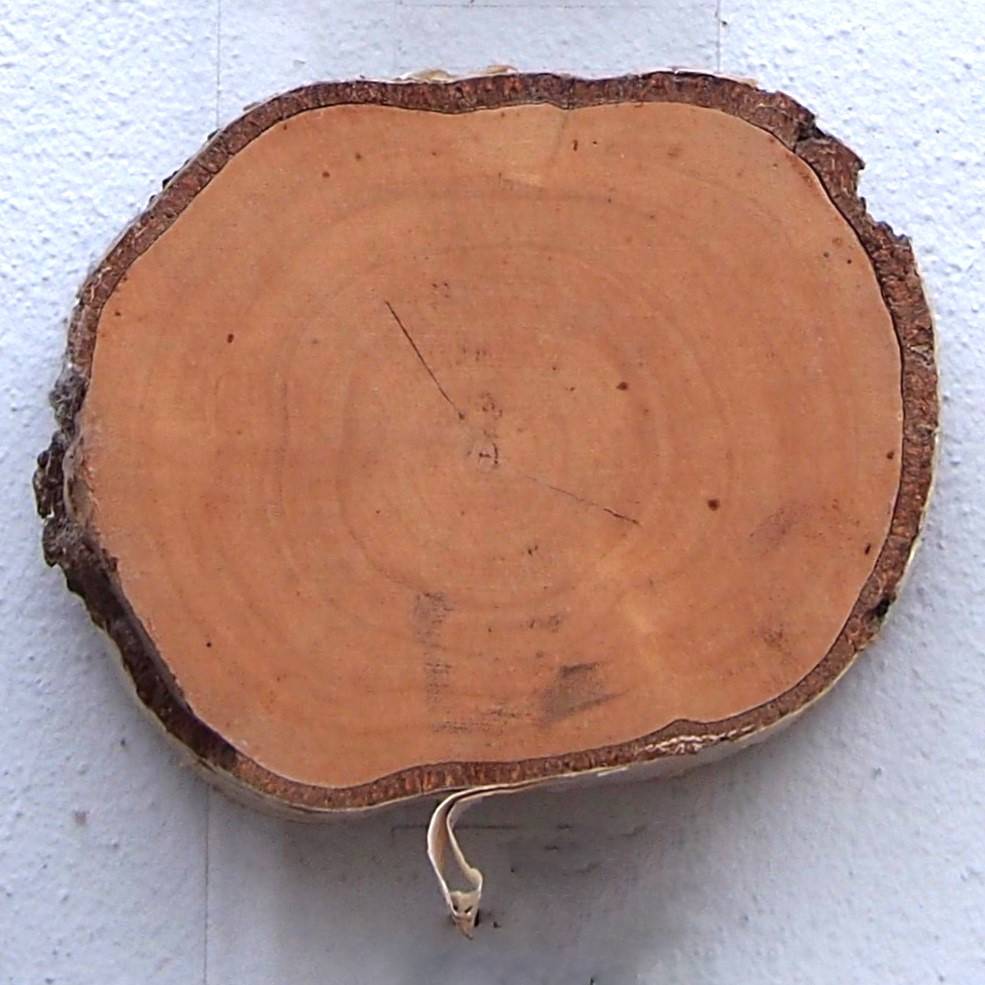
Silver birch is a pioneer of open sites – it is the first to colonise clearings, abandoned fields and burnt areas. It is a fast sprinter that grows 60–80 cm a year when young, but it has a shorter lifespan: few birches live longer than 80–100 years. Its trunk diameter increases by 6–10 mm a year.
Birch is regarded as a "nurse tree" – with its quick, light canopy it provides a bright shelter for slower-growing species such as oak or beech. Birch wood is white, medium-hard and uniform – with no prominent growth rings at first glance. It is used to make plywood, veneers and decorative objects, such as those in AMADEA's range of wooden home accessories.
European beech – Fagus sylvatica

European beech is a tree of shade and moist slopes – it dominates the higher altitudes of Czech forests from 400 to 1,000 m. It grows at a medium rate: 30–60 cm a year in height and 4–7 mm a year in trunk diameter. It can live for 300 years or more and grow over 40 metres tall.
Beech wood is light brown to reddish, hard and heavy. Its so-called "mirrors" are striking – medullary rays visible on a lengthwise cut as shiny flecks. Beech is used for floors, furniture, kitchen utensils and serving boards. Ancient beeches form the backbone of the primeval forests of the Šumava and the Moravian Karst protected landscape area.
Small-leaved lime – Tilia cordata
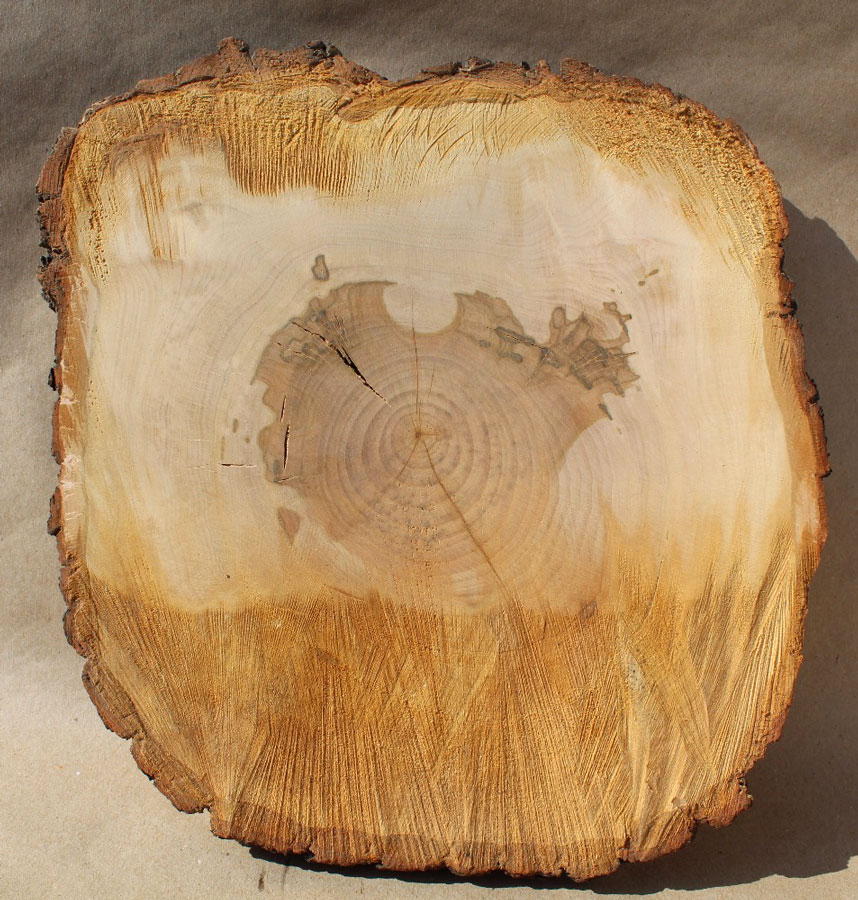
The lime (linden) is the national tree of the Czechs and one of the longest-living Central European trees – it can live for 500–1,000 years. It grows at a medium rate: 30–60 cm a year in height and 4–7 mm in trunk diameter. The best-known specimens are the monumental limes on village greens and by churches all over the country.
Lime wood is soft, pale (almost white), uniform and very easy to work. With no pronounced smell or taste, it is ideal for carving, toy making and small decorations. It takes paint and varnish beautifully. Many traditional wooden toys and nativity figures are carved from lime.
The most common mix-ups when identifying trees by their wood
Without bark, leaves and fruit, identifying a wood is a challenge even for experienced foresters. Here are the three most common mix-ups:
Comparison table: growth rates of Czech trees
| Tree | Annual height increment | Trunk increment (mm/year) | Max. age | Wood hardness | Typical uses |
|---|---|---|---|---|---|
| 🌳 Pedunculate oak | 30–50 cm | 3–5 mm | 1,000+ years | Very hard | Barrels, floors, boards |
| 🌲 Norway spruce | 50–80 cm | 8–12 mm | 300–600 years | Medium | Building, instruments, furniture |
| 🌲 Scots pine | 30–60 cm | 4–8 mm | 300–500 years | Medium | Timber construction, decorations |
| 🌿 Silver birch | 60–80 cm | 6–10 mm | 80–100 years | Medium-hard | Plywood, veneers, products |
| 🍂 European beech | 30–60 cm | 4–7 mm | 300–400 years | Hard | Floors, boards, furniture |
| 🌸 Small-leaved lime | 30–60 cm | 4–7 mm | 500–1,000 years | Soft | Carving, toys, decorations |
Frequently asked questions about tree growth rates
What are growth rings and how do they form?
A growth ring is the layer of wood added during one growing season. In spring, when the tree grows quickly, pale and less dense earlywood forms. In summer and autumn, when growth slows, darker and denser latewood forms. Together they make up one growth ring. By counting the rings in a cross-section of the trunk you can determine the exact age of a felled tree.
How fast does the pedunculate oak grow in Czech conditions?
The pedunculate oak is one of the slowest-growing native trees – on average it grows 30–50 cm a year in height and 3–5 mm in trunk diameter. Slow growth creates dense, narrow growth rings that make oak wood exceptionally hard, resistant and durable. It is happiest in the lowlands of the Elbe valley and South Moravia.
Why are growth rings sometimes wider and sometimes narrower?
The width of a growth ring reflects the conditions of that year. A moist, warm summer with plenty of light produces a wider ring, while drought or frost produces a narrow one. Dendrochronologists – scientists who study tree rings – can reconstruct climatic conditions centuries back from the pattern of ring widths. The longest oak chronologies in Europe go back as far as 10,000 years.
Which tree grows fastest in Czechia?
Of the naturally occurring native trees, poplars and willows grow fastest – they can add 1–2 metres a year. Of the common forest trees, Norway spruce and silver birch are the fastest, both growing 50–80 cm in height a year. Introduced species such as Douglas fir or black locust can be even faster.
How does the growth rate of trees affect the quality of AMADEA wooden products?
Slow-growing trees such as oak or beech form narrow, dense growth rings – the wood is harder, heavier and more durable. That is ideal for kitchen and serving boards, which have to withstand daily use. Softer and faster-growing trees such as lime or birch, on the other hand, are a great choice for cut-out decorations and ornaments. AMADEA uses wood from native trees and checks every product by hand.
🌳 Looking for a gift made of natural wood? At AMADEA you will find handmade products from Czech forests – from decorations to kitchen accessories.
Visit AMADEAAuthor: Martin Portych – specialist in wooden products, gift advice and shop content
Editorial policy: Our content is based on the day-to-day practice of the AMADEA shop, the real needs of our customers and a commitment to clear, useful and trustworthy information.