
Herbs love the sun – but not all of them, and not all the time. On hot summer days, when the thermometer climbs above 30 °C in South Moravia and on Prague balconies alike, the more sensitive varieties start to wilt, turn brown and bolt prematurely. In this guide we show you how to protect herbs from the sun so they keep their fragrance and flavour all summer long.
Before you start: This guide does not need any expensive equipment. A light shade net or an old parasol, a handful of mulch (shredded bark, straw or grass clippings), a watering can and a little attention will do. If you grow your herbs in movable containers, you have a big advantage – you can give them shade simply by moving them a few metres. The whole job takes half an hour and the plants will repay you.
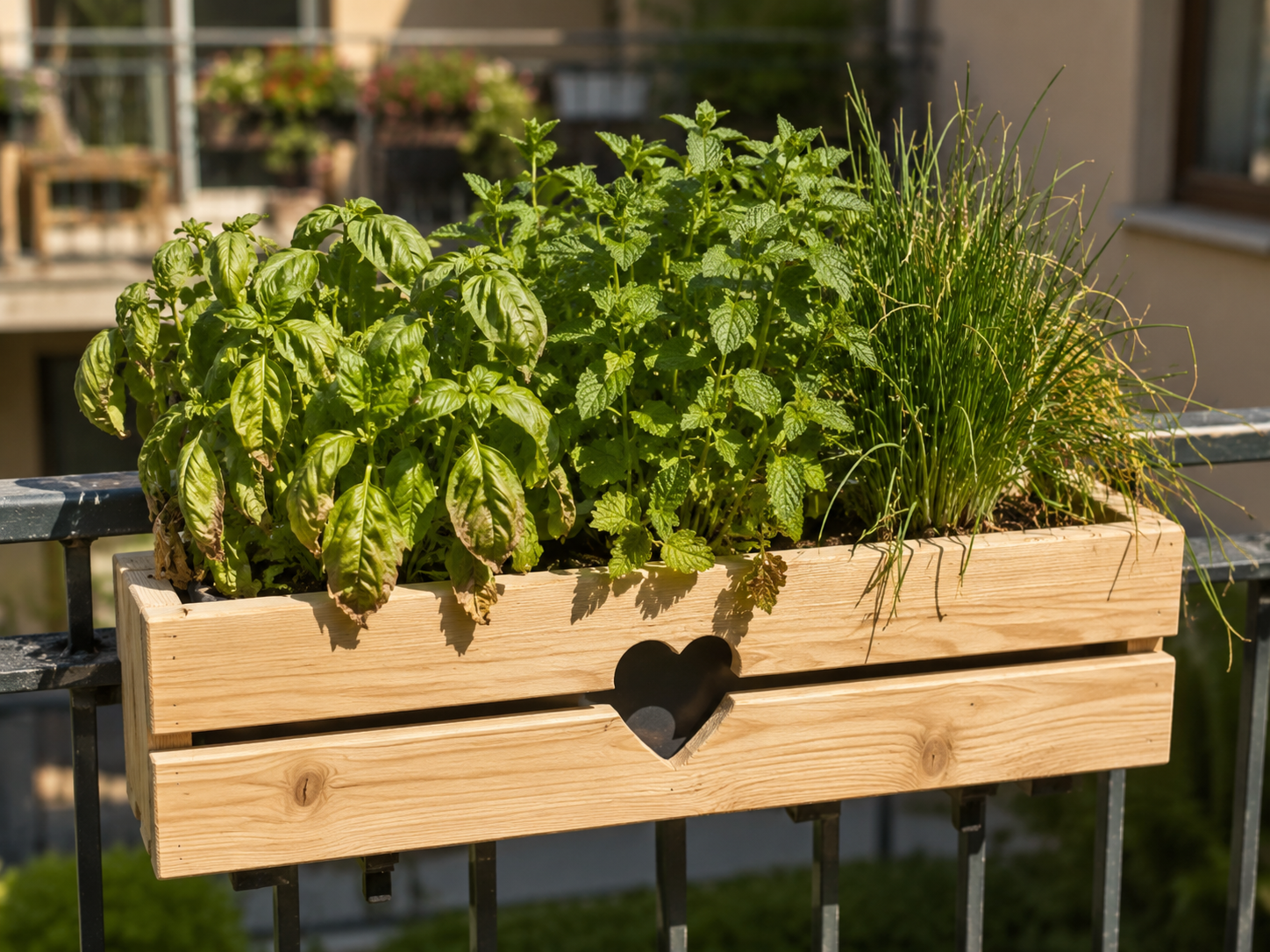
Why herbs suffer in a Czech summer
Most growers know the rule “herbs want sun” and follow it faithfully. But Czech summers are no longer what they were in our grandmothers' day. Tropical days above 30 °C are becoming more frequent, and the warmest regions – South Moravia, the Elbe lowlands and the area around Prague – experience heatwaves that herbs preferring cooler conditions have not had time to adapt to.
Growing in containers makes the problem worse. A planter on hot concrete paving or a south-facing railing behaves completely differently from a bed in the ground – the small volume of soil heats up quickly, water evaporates within a few hours and the roots literally “cook”. That is exactly why herbs on balconies and terraces often suffer more in the heat than those in the garden.
🌿 Growing herbs on a balcony or terrace? At AMADEA you will find handmade wooden planters, flower pots and herb markers made from Czech wood that make growing more enjoyable and better organised.
Browse planters and flower potsHow to protect herbs from the sun, step by step
Protecting herbs from the heat comes down to six simple steps. The point is not to hide plants from the light – that would harm them as much as too much sun. The aim is to find a balance and soften only the harshest midday hours.
1. Find out which herbs really need protection
Not all herbs are the same. Mediterranean varieties – rosemary, thyme, oregano, sage, savory and lavender – come from parched hillsides and thrive in full sun and drought. These plants usually need no protection; on the contrary, in the shade they weaken and lose their aroma.
The ones that deserve attention are leafy herbs with delicate leaves: basil, parsley, coriander, chives, mint, lemon balm and dill. These varieties lose a lot of water through their leaves and wilt quickly in the midday heat. Coriander is the champion sufferer – in hot weather it bolts within a few days and stops producing leaves. Before you do anything, go through your plants and divide them into “sun lovers” and “sensitive ones”.
2. Learn to recognise the signs of sun stress
A herb will tell you itself when it is too much. Watch for four main signs: wilting around midday even when the soil is moist (the plant cannot keep up with evaporation), brown, crispy leaf edges, which indicate direct scorching, fading to a pale yellow and finally premature bolting, when the herb tries to set seed quickly before the heat destroys it.
It is important to observe your plants daily, ideally at midday. If your basil droops at one o'clock in the afternoon but recovers after watering in the evening, that is a warning sign that the spot is borderline. Once scorched leaves appear, you cannot revive them – so it is better to act early.
Tip: A herb that looks fresh in the morning and droops at midday is not short of water, but overheated. The solution is not more watering, but less sun during the hottest part of the day.
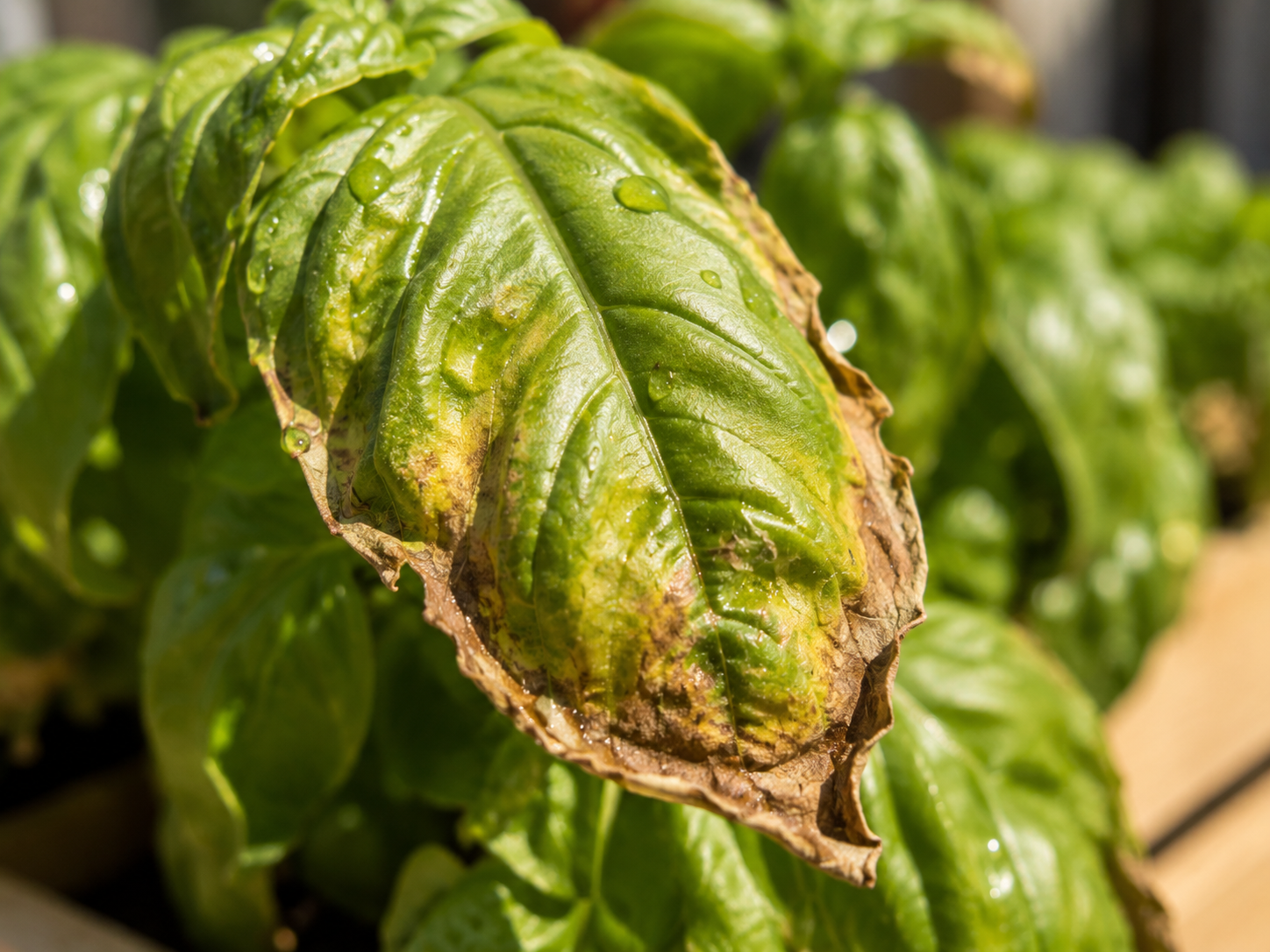
3. Choose the right spot and make use of partial shade
This is where the main advantage of growing in containers comes in – mobility. Place sensitive herbs where they get morning and early-evening sun, but shade during the harshest hours (roughly 11 am to 4 pm). In practice that means an east-facing balcony, a spot under a roof overhang or the cover of a taller plant.
If your herbs are in movable wooden planters and flower pots, simply move them a little further into the shade at midday and back again in the evening. Wooden containers also have the advantage over dark plastic that they do not overheat as much in the sun, so the roots stay at a pleasant temperature for longer.
4. Shade herbs during the hottest part of the day
When moving them is not possible – for example with an established raised bed or a larger planting – temporary shading helps. The cheapest solution is a white garden shade net stretched over the plants, but an old parasol, a light-coloured sheet or a natural screen of taller plants will also do.
A tried-and-tested traditional method is companion planting: plant sensitive herbs in the partial shade of taller crops. In a Czech garden, tomatoes, climbing beans or sunflowers are the classic choice – they cast pleasant shade over midday while loving the sun themselves. Shading is mainly needed on tropical days; in an ordinary summer you can manage without a screen.
5. Water smartly and mulch
In the heat, water is both an ally and an enemy. The key is timing and technique. Water generously early in the morning, when the water has time to soak in before the sun evaporates it. Always pour directly onto the soil, never onto the leaves at midday – wetting the foliage in the heat does not cool the plant effectively and can encourage leaf diseases.
The second winner is mulching. A layer of shredded bark, straw or grass clippings two to three centimetres thick keeps the soil moist and cool even in the greatest heat. Mulch also stops weeds from growing, and thanks to it you do not have to water the planter as often. It is the most effective one-off measure you can take in just a few minutes.
Tip: Put wooden herb labels next to each herb in your planters. It will be easier to see which variety is flowering, bolting or needs moving into the shade.
6. Think about long-term measures
If you grow herbs on a larger scale, it pays to rely on solutions that work all season. Raised beds make maintenance easy, and for sensitive varieties you can position them so they get natural midday shade from a fence, a pergola or taller plants.
Grouping plants together also works well. Several containers placed close together create a more humid microclimate around the leaves, and the plants shade each other's root balls. Together with a well-chosen spot and mulch, you get a system that copes with hot days without your daily assistance. You will find everything you need for a herb garden in the Garden & Barbecue section.
The most common mistakes to avoid: Do not water herbs over the leaves at midday – in strong sun it does more harm than good. Do not move plants abruptly from deep shade into full sun without several days of getting used to it, otherwise they will scorch in a single day. And do not panic and overwater: waterlogged soil in the heat easily rots the roots, which damages the plant more than the sun itself.
Products that suit growing herbs
The tips in this guide are easier with the right helpers. Here are three from the AMADEA workshop, handmade from Czech wood:


Frequently asked questions
Which herbs suffer most from the sun in summer?
The most sensitive are leafy herbs with delicate leaves – basil, parsley, coriander, chives, mint and dill. Mediterranean varieties such as rosemary, thyme, oregano, sage and lavender, on the other hand, love sun and drought and usually need no protection.
Does watering help against sun scorch?
The right watering keeps the plant in good condition, but it cannot revive scorched leaves. Timing is key: water early in the morning directly onto the soil and avoid wetting the leaves in the midday heat.
Should I move herbs into full shade when it is hot?
No. Even sensitive herbs need enough light, otherwise they become leggy and weak. Partial shade, or shade only during the hottest part of the day (roughly 11 am to 4 pm), combined with morning or early-evening sun is ideal.
Which AMADEA products are suitable for growing herbs?
Wooden planters and flower pots, which can easily be moved according to the sun, herb markers and labels to keep track of your plants, and raised beds for larger plantings in the garden. All handmade by AMADEA from Czech wood.
🌳 Want to have herbs at hand all summer? At AMADEA you will find wooden planters, herb markers and raised beds from Czech forests – handmade pieces that brighten up any balcony or garden.
Go to the Garden sectionAuthor: Martin Portych – specialist in wooden products, gift advice and shop content
Editorial policy: Our content is based on the day-to-day practice of the AMADEA shop, the real needs of our customers and a commitment to clear, useful and trustworthy information.