
Plastic is cheap, light and practical – but we pay an increasingly visible ecological and aesthetic price for that convenience. Natural materials for the home, and wood in particular, are making a well-deserved comeback: into kitchens, living rooms and gardens all over the Czech Republic. If you are wondering whether to swap plastic accessories for something more durable, more beautiful and kinder to nature, read on – you will only regret one thing about this decision: that you didn't make it sooner.
Why natural materials make sense in the home
Thirty years ago plastic was a symbol of progress and modernity. Today we see it differently: as a material with a huge carbon footprint that takes hundreds of years to break down in nature and whose microparticles can be found literally everywhere – in soil, in water and even in human blood. The interest in eco-friendly home accessories is therefore not just a passing trend. It is a conscious decision about what we want to surround our everyday space with.
Wood, by contrast, has been with humankind since the dawn of civilisation. It is renewable, biodegradable and, with proper forest management, truly sustainable. The Czech Republic has an advantage here: native species such as lime, maple, beech and cherry grow in the favourable conditions of the Central European climate, and processing them doesn't involve travelling halfway around the world. Products made from local wood therefore have a noticeably lower carbon footprint than imported plastic alternatives.
Natural materials also have something no industrial polymer can imitate: soul. Every growth ring, every fine pattern of the wood grain is unique. A wooden accessory in the home is not just a functional object – it is a piece of nature that lives with you.
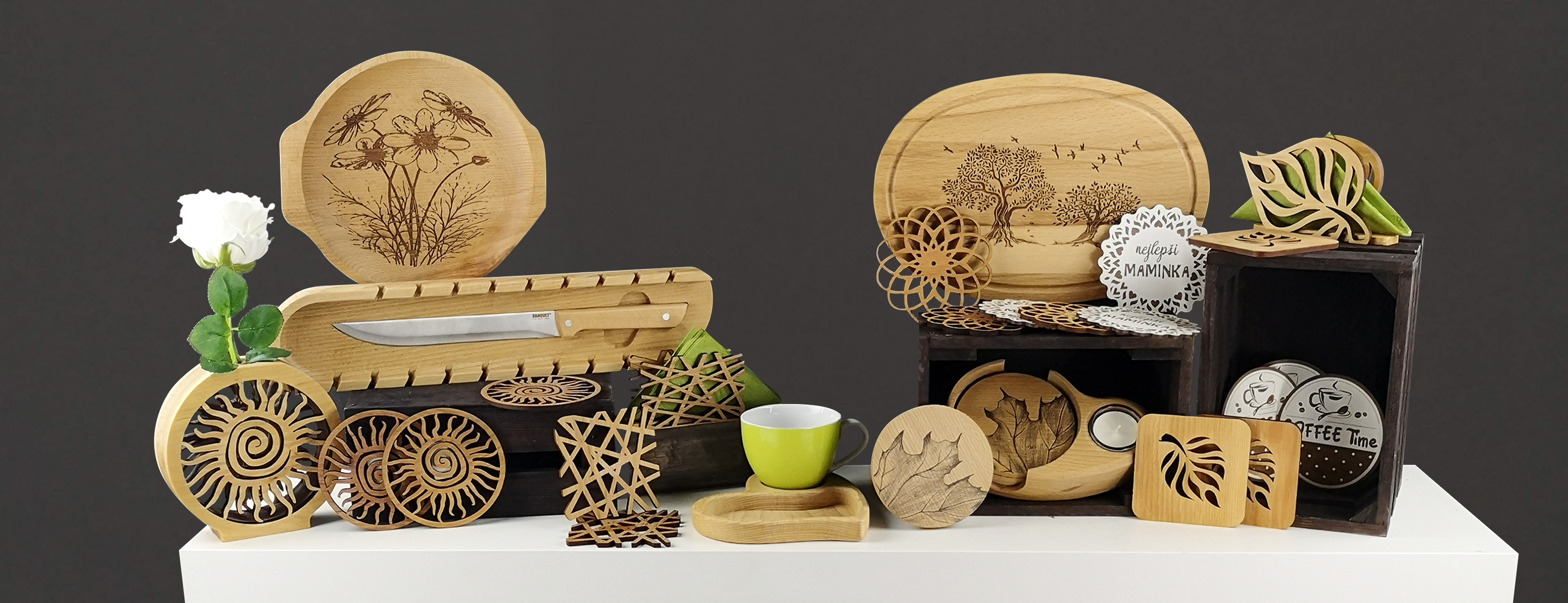
🌳 Want to bring natural materials into your home? At AMADEA you will find hundreds of handmade wooden accessories from Czech forests – for the kitchen, the living room and the garden.
Browse wooden accessoriesWhere wood beats plastic hands down
1. Kitchen: boards, bowls and utensils without microplastics
Plastic chopping boards look hygienic at first glance. But every cut of the knife creates microscopic grooves in which bacteria accumulate – and which can't be removed even in the dishwasher. What's worse, these grooves also release microplastics straight into your food. Some estimates even suggest that the average person may swallow several grams of plastic a year.
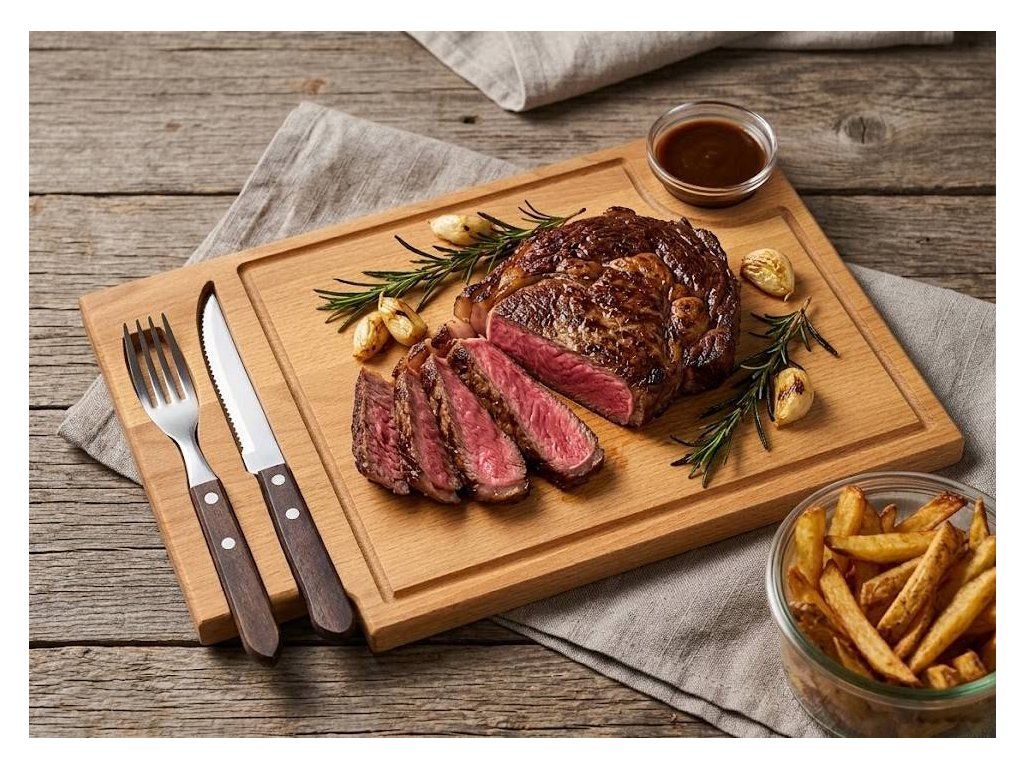
Wooden chopping and serving boards work differently. Bacteria are drawn deep into the wood fibres, where they die without access to air – and do not return to the surface. Wood also contains no synthetic polymers, so it releases nothing at all into food. Properly treated beech or maple boards can easily last for decades, and if they wear, all you need to do is sand them down and oil them again.
The same logic applies to wooden bowls and plates or spoons and wooden spatulas – the natural surface is gentle on non-stick pans, food residue doesn't stick to it, and in a well-equipped kitchen wooden utensils simply look elegant.
2. Living room: decorations with character
Plastic decorations are cheap, but within a few years they turn yellow, become brittle and look worn. Wood ages in exactly the opposite way: it develops a patina, gains depth and looks more interesting as the years go by. A wooden decoration in the living room is not just an accessory – it is an aesthetic statement about its owner's taste and values.
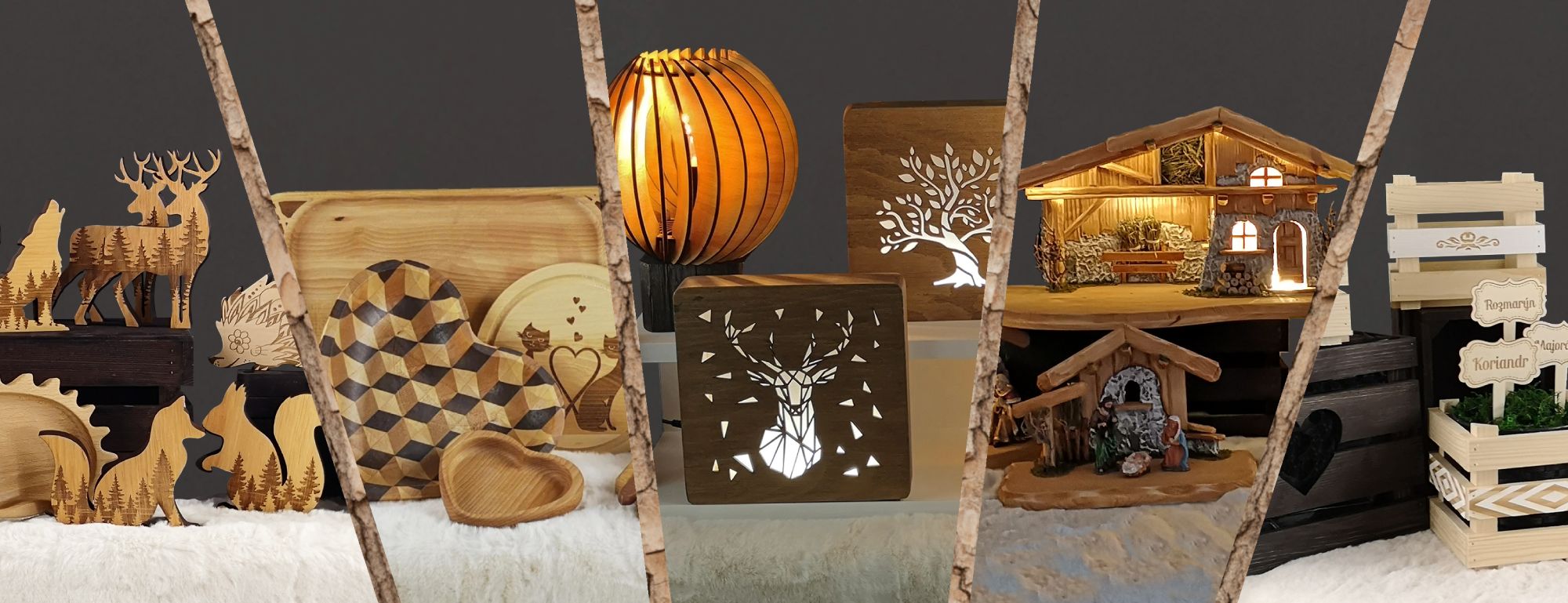
On the one hand there are large, striking pieces such as wooden mandalas or mirrors with wooden frames, which can anchor a whole room and give it character. On the other there are small touches – candle holders, vases or wooden clocks – which complement the interior subtly but distinctly. Natural materials bring a calm and warmth to a space that no plastic can imitate.
The Czech tradition of woodcarving and handmade woodwork has deep roots – from folk nativity scenes and products from the Šumava region to contemporary design pieces. Wooden decorations made in the Czech Republic are therefore also an expression of cultural identity and support for local craftspeople.
3. Garden and balcony: planters and accessories that survive the seasons
Plastic garden accessories seem practical – they are light and cheap. But after a few winters they crack, the colours fade and the material breaks down into tiny plastic fragments that mix with the soil. Wooden flower pots and planters, on the other hand, are a material that handles outdoor conditions with elegance. Moisture, frost and summer heat act on them gradually, but quality solid wood adapts – and with proper treatment it lasts many seasons.
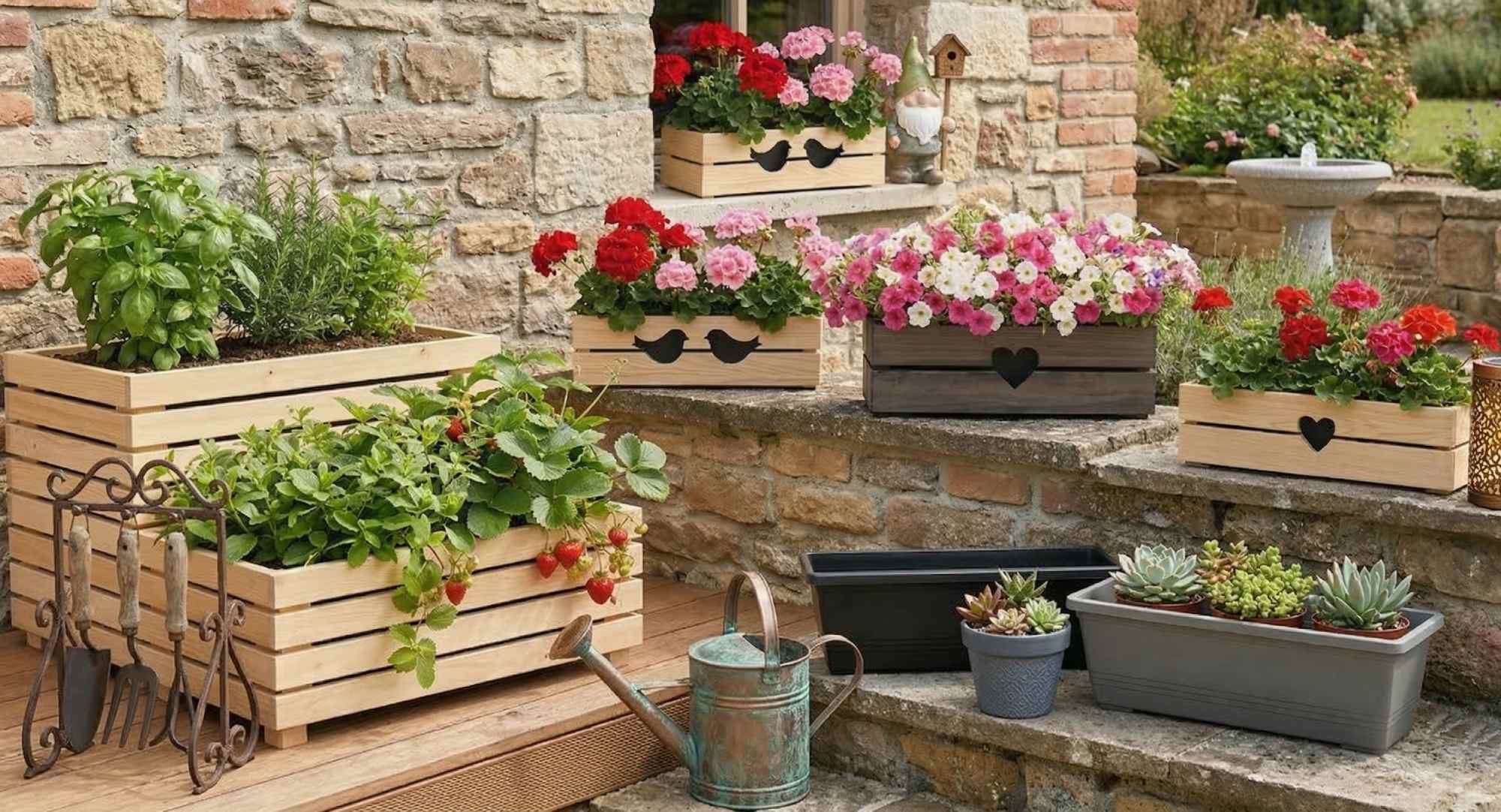
Wooden balcony planters with geraniums or herbs are especially popular – they look great and serve a practical purpose at the same time. Wood also naturally regulates the moisture of the compost better than plastic containers, so the plants' roots are happier. Plant stakes and herb labels also go perfectly with planters and give a garden or balcony a distinctive, natural character.
4. Fashion accessories: wood you can wear
Natural materials are not just for the home – wood is making its way into the fashion world too. Plastic jewellery tends to be cheap but visually empty, and it doesn't last at all. Wooden jewellery – earrings, pendants or brooches – is light, hypoallergenic, and every piece is an original in its own way, because the wood grain never repeats itself.
For those who literally want to carry natural materials with them, there are also wooden handbags or elegant wooden bow ties. An accessory like this catches the eye and starts conversations – and it is a pleasantly different alternative to mass-produced fashion from overseas factories.
Practical tip: When choosing a wooden accessory, check whether the product is labelled as made from solid wood – not from MDF, chipboard or particle board covered with plastic foil. It is solid wood that has all the advantages we describe: durability, natural character and the possibility of repair or renovation.

Wood vs. plastic: a quick comparison
| Property | Wood | Plastic |
|---|---|---|
| Renewability of the material | ✅ Yes (with sustainable forestry) | ❌ No (made from oil) |
| Biodegradability | ✅ Fully | ❌ Hundreds of years |
| Microplastics in food | ✅ No risk | ❌ Demonstrable risk |
| Durability with care | ✅ Decades, repairable | ⚠️ Yellows, becomes brittle, cracks |
| Aesthetic value over time | ✅ Develops a patina, improves | ❌ Ages unattractively |
| Carbon footprint of production | ✅ Lower (especially local wood) | ❌ High |
| Purchase price | ⚠️ Higher initial investment | ✅ Lower (but shorter lifespan) |
| Repairability | ✅ Sand down, re-oil | ❌ Usually cannot be repaired |
Frequently asked questions about natural materials in the home
Is wood really more eco-friendly than plastic?
Yes. Wood is a renewable raw material that replenishes itself naturally with sustainable forest management. Unlike plastic, it biodegrades and its production has a significantly lower carbon footprint. The Czech Republic also has a long tradition of responsible forestry, so wood from local sources is even kinder to the environment than imported alternatives.
How long do wooden home accessories last?
With regular care, quality wooden accessories last for decades. Unlike plastic, wood can be sanded down and oiled – restoring its original freshness without you having to buy a new piece. This longevity makes wooden products a conscious economic and ecological choice.
Are wooden kitchen accessories hygienic?
Yes. Wood has natural antibacterial properties – bacteria are drawn deep into the fibres, where they die without access to air. They do not return to the surface. Well-treated wooden chopping boards or spatulas are just as hygienic as plastic alternatives when cleaned properly, and they release no microplastics into food.
Where can I buy handmade wooden home accessories from the Czech Republic?
At AMADEA you will find hundreds of handmade wooden products from native wood species – from kitchen chopping boards and bowls to living-room decorations, garden planters and fashion jewellery. Everything is made in the Czech Republic with an emphasis on the natural character of the material and handcrafting.
🌿 Take the first step towards a natural home. Explore handmade wooden accessories from Czech wood – for the kitchen, the living room, the garden or as a gift.
Explore AMADEAAuthor: Martin Portych – specialist in wooden products, gift advice and shop content
Editorial policy: Our content is based on the day-to-day practice of the AMADEA shop, the real needs of our customers and a commitment to clear, useful and trustworthy information.