
The Czech Republic is one of Europe's great mushroom-picking nations – and no wonder. Our forests hide more than 10,000 species of fungi, around 150 of which you may come across on any walk. But can you reliably recognise the mushrooms of Czech forests – and safely tell edible ones from poisonous ones? Try our interactive quiz, then read the detailed guide to the best-known species, including the treacherous look-alikes that send hundreds of mushroom pickers to the doctor every year.
🍄 Can you identify mushrooms? Test yourself in the quiz!
Choose a difficulty level and find out how well you know the most common mushrooms of Czech forests – from the legendary penny bun to the treacherous death cap.
🌳 Looking for a gift made of natural wood? At AMADEA you will find handmade products from Czech forests – from decorations to kitchen accessories.
Visit AMADEAA guide to the mushrooms of Czech forests
Here is an overview of the eight most important mushroom species you are most likely to find in Czech forests. For each one you will find reliable identification features, an interesting fact and a warning about look-alikes.
Penny bun (cep, porcini) – Boletus edulis

The penny bun is the undisputed queen of Czech mushroom picking. It grows from the lowlands of the Elbe valley to the mountain spruce forests of the Šumava and Krkonoše, and is most abundant between 400 and 900 m above sea level in mixed and coniferous forests. Its brown cap can reach 25 centimetres across, and its firm white flesh keeps its colour even when cut – a key safety feature.
There is no ring on the stem, but rather a characteristic pale network (reticulum), visible especially in the upper part. The tube layer under the cap is white when young and gradually turns yellow-green. The penny bun is excellent for drying – dried ceps keep their intense aroma and are the basis of the traditional Czech mushroom sauce. Drying mushrooms has a centuries-old tradition in Czechia, and AMADEA wooden kitchen utensils are ideal for preparing fresh mushrooms.
Chanterelle – Cantharellus cibarius

The chanterelle is the icon of summer mushroom picking – bright yellow-orange, firm and fragrant. It grows from June to November throughout the Czech Republic, in both broadleaved and coniferous forests, from the České Budějovice basin to the foothills of the Vysočina highlands. The whole mushroom, including the stem, is edible. Thanks to its firm texture it is rarely infested by maggots and travels well.
Its characteristic feature is its false gills – not true gills, but forked ridges running down the stem. Chanterelles are prized around the world, with 150,000–200,000 tonnes sold every year. They are excellent in creamy sauces or pickled in vinegar. If you want to have dried mushrooms always to hand, get some practical wooden trays and containers from AMADEA, perfect for storing them.
Parasol mushroom – Macrolepiota procera

The parasol is the most impressive Czech mushroom – an open cap can be up to 40 centimetres across and the stem up to 30 centimetres tall. It grows from June to November on forest edges, in parks and on grassy areas of mixed forests throughout the country, abundantly for example in the Brdy hills or the forest belts of Central Bohemia. Its white flesh hardly changes colour when cut (it is the related shaggy parasol that reddens).
The key features are: a movable ring on the stem (you can slide it up and down), a scaly pattern on the brown cap and a bulb at the base of the stem. Parasols are perfect for frying as a mushroom schnitzel – coated in flour, egg and breadcrumbs and fried in oil. Picking parasols in the garden is not recommended, because they are easily confused with related species growing nearby.
Brown birch bolete – Leccinum scabrum

The brown birch bolete is a faithful companion of the birch – you will find it only under this tree, from April to November. It grows abundantly in damper places, on the edges of peat bogs and along streams in foothill areas, for example in the Šumava or the Jeseníky mountains. Its creamy-brown hemispherical cap and a stem covered with grey-black scales are its unmistakable features.
When cut, the flesh turns grey to bluish-violet – this is typical of the species and does not indicate toxicity. It tastes excellent in soups and sauces. All the scaber stalks (oak, spruce and aspen) are edible, and their Czech second names reveal which tree to look for them under – a great memory trick for beginners.
Honey fungus – Armillaria mellea

Honey fungus is the autumn mushroom par excellence – it fruits massively from September to November and grows in clusters on stumps, trunks and at the foot of living trees. You will find it throughout the country, abundantly in the broadleaved forests of Central Bohemia, in Moravia and in foothill spruce forests. It is also one of the largest organisms on Earth – the mycelium of a single individual can connect hectares of forest.
Honey fungus is edible only after thorough cooking (at least 20 minutes) – raw, it causes digestive problems. Confusing it with the highly poisonous funeral bell (Galerina marginata) is dangerous – the funeral bell lacks the typical scaly ring and tends to grow singly or in small groups rather than in dense clusters. Honey fungus is excellent pickled.
Death cap – Amanita phalloides

The death cap is the most dangerous mushroom in Czechia and causes approximately 90% of all fatal mushroom poisonings in Europe. It grows from July to October, mainly in warmer broadleaved forests under oaks and beeches, abundantly for example in the Bohemian Karst or the oak woods of South Moravia. Its olive-green cap with white gills and the volva (sac) at the base of the stem are reliable identification features.
Its treachery lies in the fact that symptoms of poisoning appear only 6–24 hours after eating – by which time the poison has been fully absorbed. Amatoxins irreversibly damage the liver and kidneys. Cooking does not reduce the toxicity. A small mix-up with brittlegills or field mushrooms can cost a life. Always dig up the whole mushroom including its base, and never rely on the "silver spoon" test or other myths about testing for poison.
Oyster mushroom – Pleurotus ostreatus

The oyster mushroom is a winter delicacy – it fruits from October to April, making it one of the few mushrooms you can find even in the frosty months. It grows on dead or dying broadleaved wood, abundantly on beeches, poplars and willows throughout the country. Its grey-brown oyster-shaped cap, white gills running down the stem and pleasant mushroomy smell are its features.
Oyster mushrooms are not only tasty but also nutritious – they contain beta-glucans with a proven positive effect on the immune system. Today they are grown commercially and are available in shops all year round. In the forest, look for them on fallen trunks, especially after the first autumn frosts on forest edges in the Elbe valley or Podyjí.
Saffron milk cap – Lactarius deliciosus
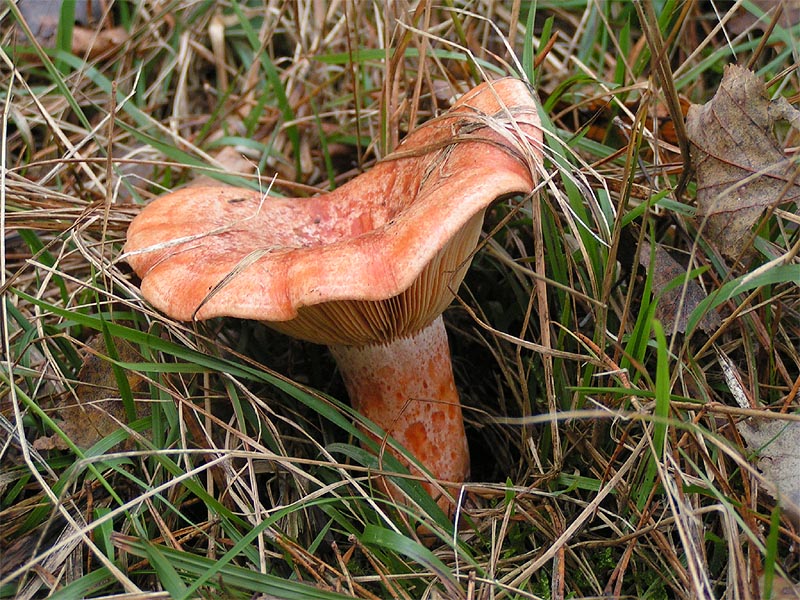
The saffron milk cap is the pride of pine forests – it grows only under pines and larches from late summer to October. In Czechia it is common in the sandy pine woods of Central and Northern Bohemia, in the Sázava region and in the White Carpathians. Its orange cap with concentric rings and the orange milk that oozes out when it is damaged are its unmistakable features.
The rule for safely picking milk caps is simple: only pick those that release orange milk when cut. The woolly milk cap (Lactarius torminosus), with white milk, is inedible and causes digestive problems. The saffron milk cap is excellent fried, pickled or as a side dish with meat. You can then store the results of your foray beautifully in AMADEA wooden containers and boxes.
The most common mix-ups that cause poisoning
Every year hundreds of mushroom pickers in Czechia end up at the doctor's because they confused similar-looking species. Here are the three most dangerous pairs:
The bitter bolete has a slightly pinkish tube layer under the cap and tastes unbearably bitter on the tongue. The penny bun is white to yellow-green under the cap and has a neutral taste. The mix-up is not fatal, but it will ruin a whole meal.
The false chanterelle has true, crowded gills (not ridges), a vivid orange colour and grows on rotting conifer wood and litter. The chanterelle has forked false ridges and grows from the ground among leaves. The mix-up causes digestive problems but is not fatal.
This mix-up is fatal. The greencracked brittlegill has no volva at the base of the stem, has brittle gills and crumbles like chalk. The death cap has a volva (white sac), a ring on the stem and flexible gills. Always dig up the whole mushroom and check the base of the stem.
Comparison table of the best-known edible mushrooms
| Species | Season | Habitat | Key feature | Worst look-alike |
|---|---|---|---|---|
| 🍄 Penny bun | June–October | spruce and mixed forests | network on the stem, white flesh | bitter bolete (bitter) |
| 🟡 Chanterelle | June–November | all types of forest | false ridges, apricot scent | false chanterelle |
| 🌂 Parasol mushroom | June–November | forest edges, parks | movable ring, scales | small Lepiota species (poisonous) |
| 🌲 Brown birch bolete | May–November | under birches | scales on the stem, turns grey | orange birch bolete (edible) |
| 🍂 Honey fungus | September–November | on wood, in clusters | clusters on stumps, ring | funeral bell (poisonous) |
| 🦪 Oyster mushroom | October–April | on broadleaved wood | oyster shape, grows on trunks | no dangerous look-alike in the wild |
| 🟠 Saffron milk cap | August–October | pine and larch forests | orange milk when damaged | woolly milk cap (inedible) |
Frequently asked questions about mushrooms of Czech forests
How can I safely identify a penny bun?
You can recognise the penny bun (Boletus edulis) by its brown cap, the pale network on its stem and the white to yellow-green tube layer under the cap. The flesh is firm and white and does not change colour when cut or squeezed – this is a crucial safety criterion. Never mix it with mushrooms whose flesh turns blue or red unless you are sure of the species.
When is the best time to go mushroom picking in Czechia?
The main season runs from July to October. It peaks in August and September after rain alternating with warm weather. Spring species such as morels and false morels are found from March to May, while oyster mushrooms can be found on fallen trunks even in December and January. The richest areas are mixed forests dominated by spruce at 400–900 m above sea level, for example in the Šumava, the Krkonoše or the Orlické hory mountains.
How does the chanterelle differ from the false chanterelle?
The chanterelle has forked false ridges (not gills) that run down the stem, and it grows from the soil among leaves. The false chanterelle, by contrast, has true, crowded gills of a vivid orange colour and grows on rotting conifer wood. The mix-up is not fatal but causes digestive problems. If in doubt, leave the mushroom in the forest.
Why is the death cap so dangerous?
The death cap (Amanita phalloides) contains amatoxins – substances that damage the liver and kidneys. Symptoms appear only 6–24 hours after eating, when the poison has already been fully absorbed and pumping the stomach no longer helps. It causes approximately 90% of all fatal mushroom poisonings in Europe. Cooking does not reduce its toxicity. If you suspect poisoning, call the emergency services immediately (155 in Czechia).
Can I carry mushrooms home in a plastic bag?
No – mushrooms in a plastic bag suffocate, warm up and spoil quickly. A traditional wicker basket or a wooden crate lets mushrooms breathe, and at the same time spores fall to the ground and help the population renew naturally. At AMADEA you will find beautiful wooden crates and boxes that are a practical and attractive accessory for every mushroom picker.
Where can I find wooden products at AMADEA that make a good gift for mushroom pickers or nature lovers?
At AMADEA you will find a wide range of handmade wooden products from Czech forests – from kitchen and serving boards and wooden bowls and plates to decorative crates. Everything is made using traditional craft methods in the Czech Republic.
🌳 Looking for a gift made of natural wood? At AMADEA you will find handmade products from Czech forests – from decorations to kitchen accessories.
Visit AMADEAAuthor: Martin Portych – specialist in wooden products, gift advice and shop content
Editorial policy: Our content is based on the day-to-day practice of the AMADEA shop, the real needs of our customers and a commitment to clear, useful and trustworthy information.