
The relationship between trees and insects is one of the oldest and most complex alliances in nature. Under the bark of every old oak, spruce or lime, a hidden world is at work – some insects help trees with pollination, others break down dead wood, and others weaken sick trees. This article takes you into a fascinating world where cooperation meets rivalry, and offers an interactive game to help the knowledge stick.
🎮 Test yourself: Quiz on insects and trees
🌳 Looking for a gift made of natural wood? At AMADEA you will find handmade products from Czech forests – from decorations to kitchen accessories.
Visit AMADEAGuide: Insects and trees of Czech forests
Every forest is a vast web of relationships. Trees give insects food, shelter and a place to breed. Insects repay them through pollination, by breaking down dead wood and – sometimes involuntarily – by thinning out weakened trees. Understanding these links is key to protecting the biodiversity of Czech forests, whether in the Šumava, the Brdy hills or the Moravian Karst.
European spruce bark beetle – Ips typographus

The European spruce bark beetle is a small beetle from the weevil family, just 4–5.5 mm long, yet it can destroy entire hectares of spruce forest. It lives in close association with the Norway spruce (Picea abies), its primary host tree. The female chews a maternal gallery under the bark running along the grain of the wood and lays eggs along its sides. The hatched larvae then eat the phloem, cutting off the flow of nutrients through the tree.
Spruces defend themselves by producing resin, which literally glues the insects in place. A healthy tree can fight off bark beetles. The problem comes during outbreaks – hundreds of beetles flood a single tree at once, guided by pheromone signals, and break through its defences. In Czech forests, especially in the Šumava and the Vysočina highlands, the bark beetle has caused a calamity over the last two decades that has fundamentally changed the landscape.
Bark beetle galleries – a story carved into wood

Bark beetle galleries are fascinating evidence of biological specialisation. The maternal gallery is straight, while the larval galleries fan out at right angles to the grain – each larva carves its own path. It pupates at the end, and the young beetle emerges fully developed. At optimal temperatures (above 16 °C) the whole cycle takes 6–8 weeks, so in a good summer the bark beetle can produce two or three generations.
Wood attacked by bark beetles is valuable for the forest ecosystem. It provides habitat for dozens of other insect species, birds (woodpeckers) and fungi. Foresters increasingly accept that a certain amount of bark-beetle wood in the forest is natural and desirable. Wood from certified forests, processed gently and without chemicals, is also used to make kitchen and serving boards – although spruce is too soft for boards, whereas beech and maple are ideal.
Stag beetle – Lucanus cervus

The stag beetle is the largest beetle in Central Europe – males grow up to 7.5 cm long, and their characteristic “antlers” (modified mandibles) make them unmistakable. It is closely tied to old broadleaf forests, especially oaks (Quercus spp.), but also uses beech, lime and ash. Adults fly at dusk from May to July and can be seen in the floodplain forests along the Ohře, Elbe and Dyje rivers.
The stag beetle larva lives for 3–7 years in rotting wood – in stumps, roots and the underground remains of old oaks. It does not eat healthy wood but breaks down dead material and returns nutrients to the soil. That makes it a key saproxylic species – an indicator of the health of old forests. Where the stag beetle lives, a hundred or two hundred other rare insect species are usually present too. In the Czech Republic, the stag beetle is protected both by national law and by the EU Habitats Directive.
Honey bee and lime – Apis mellifera & Tilia cordata
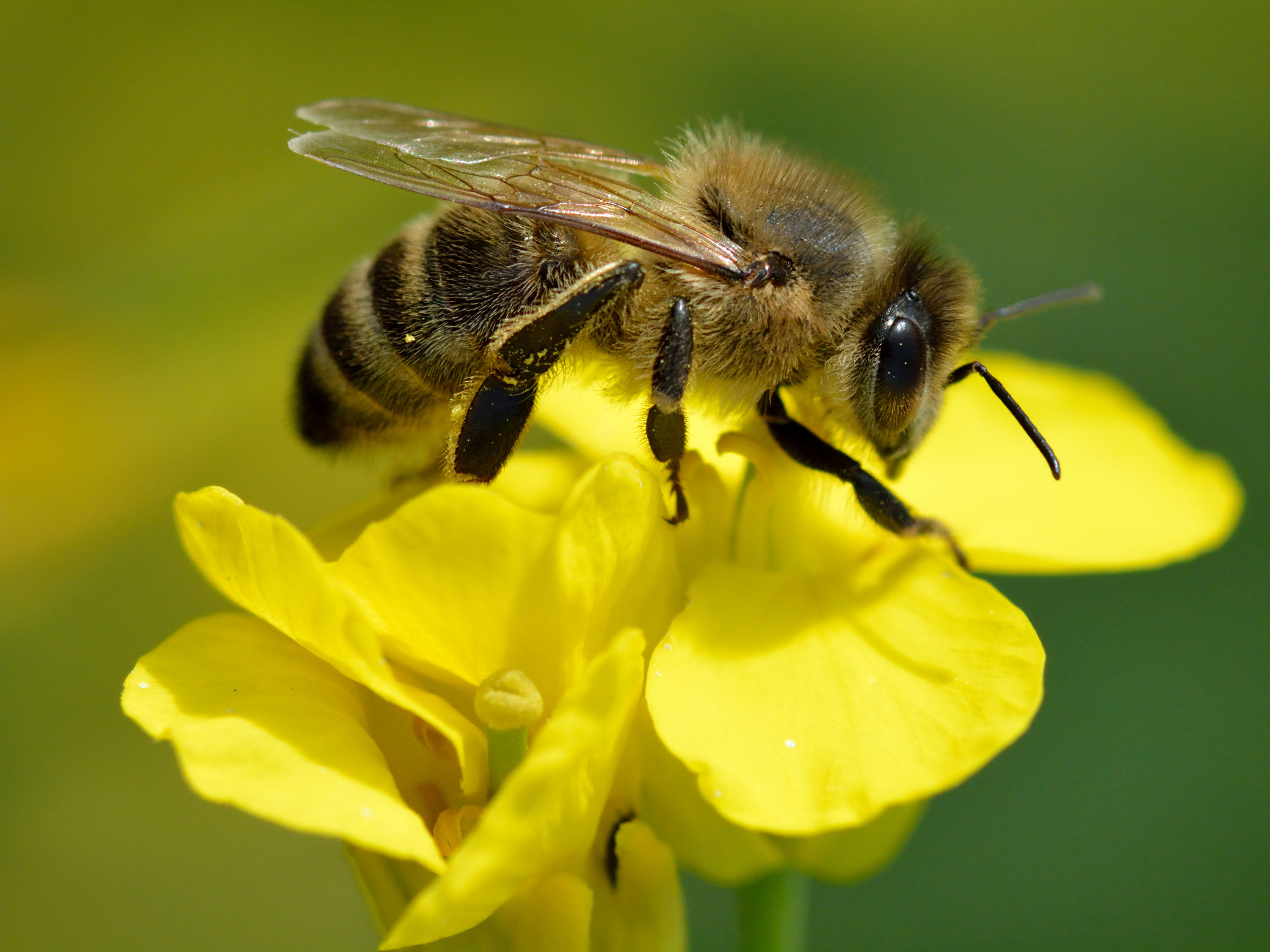
The classic example of a beneficial relationship between insects and trees is pollination. The small-leaved lime (Tilia cordata) flowers in June and July and is one of the most important nectar-producing trees in the Czech Republic. Bees collect nectar and pollen from its blossoms and make the famous lime honey – in South Moravia or the Beskydy there are entire lime avenues and groves. A single bee colony can visit millions of lime flowers in one season.
Without insects, lime would struggle to reproduce – it can self-pollinate, but insect pollination ensures genetic diversity. Conversely, bees would fare worse without lime and other nectar-rich trees. This symbiosis has lasted for millions of years. In your garden or on your balcony you can bring nature closer, for example with plant markers for nectar-rich herbs – lavender, mint and lime are a trio that reliably attracts bees.
Musk beetle – Aromia moschata

The musk beetle is a striking metallic green longhorn beetle with long antennae. The male gives off a strong musky scent – hence its name. It is tied mainly to willows (Salix spp.), especially old white willows in floodplain woods along rivers. In the Czech Republic you can find it from the Elbe lowlands through South Moravia to the Poodří region. Its larva develops for 2–3 years in living willow wood, but usually does not weaken the tree enough to kill it.
The musk beetle is also an example of an insect that helps with decomposition: its larvae contribute to the formation of hollows in old willows, where tits, bats and barn owls later nest. The saproxylic chain continues. For children, the musk beetle is a rewarding creature to observe – you may smell it before you see it. In AMADEA's toys and products for children category you will also find wooden puzzles and magnets with forest motifs that can inspire young naturalists.
The most common mix-ups and identification mistakes
Comparison: insects and their relationship with trees
| Insect species | Host tree | Type of relationship | Development in wood | Protection in the Czech Republic |
|---|---|---|---|---|
| European spruce bark beetle (Ips typographus) | Norway spruce | Parasitic (during outbreaks) | Larva and adult | Pest, controlled |
| Stag beetle (Lucanus cervus) | Oak, beech, lime | Saproxylic (decomposition) | Larva 3–7 years | Strictly protected (Czech law, Habitats Directive) |
| Musk beetle (Aromia moschata) | Willow, alder | Saproxylic + creation of hollows | Larva 2–3 years | Endangered species |
| Honey bee (Apis mellifera) | Lime, apple, black locust | Mutualism (pollination) | Does not live in wood | Domesticated species |
| Rose chafer (Cetonia aurata) | Oak, cherry, apple | Saproxylic + pollinator | Larva in compost/tree hollows | Not protected |
| European rhinoceros beetle (Oryctes nasicornis) | Oak (dead wood) | Saproxylic (decomposition) | Larva 3–5 years | Not protected |
Frequently asked questions about insects and trees
Which insects live under the bark of trees?
Under the bark live mainly beetles from the bark beetle group (Scolytinae) – for example the European spruce bark beetle (Ips typographus) in spruce or the smaller European elm bark beetle (Scolytus multistriatus) in elm. You will also find the larvae of longhorn beetles, jewel beetles and various flies there. Each species is adapted to a particular host tree and a particular layer of bark and phloem.
What are saproxylic insects and why do they matter?
Saproxylic insects are species that depend on dead or dying wood. They include the stag beetle, longhorn beetles, rose chafers and many rove beetles. They break down wood, enrich the soil with nutrients and create habitats for many other organisms. Without saproxylic insects, forests could not regenerate naturally.
Why is the spruce bark beetle such a big problem in the Czech Republic?
The European spruce bark beetle (Ips typographus) destroys the phloem – the tissue through which a tree transports nutrients. In mass outbreaks it kills even healthy trees. Over the last twenty years, drought, warmer winters and forests weakened by spruce monocultures have fuelled its spread. Czech forests, including those of the Šumava, have lost millions of cubic metres of timber. The natural defence is a biodiverse forest with a varied mix of ages and species.
How can I help stag beetles in my garden?
The most effective help is to leave an old wooden stump in your garden or bury part of an oak log in the ground. Stag beetles need rotting, fungus-rich wood in which their larvae can thrive. Do not burn old stumps or throw away pieces of wood from fruit trees. If you do not have a garden, support the protection of old trees in your area.
Where can I find nature-inspired products made from Czech wood?
At AMADEA you will find handmade products from native timbers – beech and maple chopping boards, wooden candle holders, decorations and products for children. Every piece is made in the Czech Republic with respect for nature.
🌳 Looking for a gift made of natural wood? At AMADEA you will find handmade products from Czech forests – from decorations to kitchen accessories.
Visit AMADEAAuthor: Martin Portych – specialist in wooden products, gift advice and shop content
Editorial policy: Our content is based on the day-to-day practice of the AMADEA shop, the real needs of our customers and a commitment to clear, useful and trustworthy information.