
On the eleventh of November, the Czech Republic opens the year's young wine, roasts goose and briefly pauses the autumn rush. The St Martin's Day feast is one of the few Czech traditions that is still very much alive – and informal enough to host without stress. All you need to know is how to put the table together.
Why goose and young wine
In the Czech lands, St Martin's Day was never just a church feast. The eleventh of November was above all the end of the farming year – the date when farmhands were paid, contracts were concluded and ended, and accounts were put in order before winter. That is where the Czech expression about "St Martin's pay" comes from.
The goose comes into it for purely practical reasons. In autumn it was at its plumpest and it was not worth feeding it through the winter. So it was slaughtered just then – and since it was one of the few days of the year when even an ordinary household treated itself to roast poultry, it became a feast.
Young wine has a similar origin. The harvest was over, the grapes had fermented and the first wine was drinkable in November. It is not meant for cellaring; it is drunk early and tastes fresher and lighter than wines that mature longer. That is exactly why it pairs so well with a rich roast.
The modern form with a quality label and the ceremonial opening at eleven o'clock dates from the last two decades, but the tradition itself is much older. And then there is "Martin on a white horse" – a weather saying about the first snow, which comes true roughly once every few years. We shall see this year.
🍂 Planning a St Martin's feast? Serving boards, trays and bowls made from Czech wood – handmade in a sheltered workshop.
Browse serving boardsHow to put the table together
Serve in the middle, not on plates
The most important decision is made before you put anything on the table: whether you will plate the food in the kitchen or place it in the middle. For a St Martin's feast, the second option is the clear winner.
There are two reasons. First, guests serve themselves and you do not have to keep running off during the evening. Second – and more importantly – helping yourselves from one place turns a meal into an occasion. A plate prepared in the kitchen is a restaurant; a dish in the middle of the table is a feast.
In practice this means a large serving board in the middle with the carved goose or duck on it, surrounded by bowls of side dishes. Dumplings and sauerkraut belong in separate dishes, not on the same board – otherwise everything mixes into one heap.
Work with three heights
A flat table where everything is on the same level looks dull no matter how good the food is. The trick everyone who sets tables professionally uses is simple: get three different heights onto the table.
The low level consists of boards, placemats and coasters. The middle level of bowls, jars and glasses. The high level of candle holders, a carafe or a vase with twigs. When all three layers are present, even a simple setting looks well thought out.
Just make sure the tall elements do not block the view. Choose low candle holders or move them to the edge, and place the carafe off the line where people look at each other.
Natural materials instead of decorations
A November table does not need bought decorations. What you find on a walk or at the market works better: Hokkaido pumpkins, apples, walnuts in their shells, chestnuts, heather, conifer sprigs, dried orange slices.
Stick to two or three kinds in larger quantities, not ten kinds of one piece each. A few apples arranged along the centre of the table look better than a colourful mix of everything in the house. And a wooden tray under the whole arrangement gives it shape and protects the tabletop at the same time.
Light and details
November means eating in the dark. A ceiling light on full is the quickest way to turn a feast into an ordinary dinner – dim it and let the candles do the work.
Three to five low candle holders in a row along the centre of the table work reliably. Leave taller candles for the sideboard or windowsill, where they do not block the view. If you are eating outside in the garden or under a shelter, choose lanterns that protect the flame from the wind.
Among the small details, a napkin holder and place cards are worth a mention. Neither is essential, but both give the table the impression that someone has put thought into it. A place card can be done in a hurry too – writing a name on a card and tucking it under the edge of a plate takes two minutes.
The tip that saves the most work: Set the table in the morning, not half an hour before the guests arrive. Boards, bowls, candle holders and decorations can all be prepared in advance, and in the afternoon you only need to focus on the food. This one decision almost always makes the difference between a relaxed feast and a rushed one.
St Martin's Day beyond the home
Around 11 November, events outside the home come to life in the Czech Republic too. Wine villages in South Moravia open their cellars, many towns hold St Martin's festivities and restaurants put goose menus on. If you do not feel like roasting, you can enjoy the tradition just as well out and about.
It is interesting how the tradition came back. As late as the 1990s, St Martin was more a weather saying than a celebration, and only the revival of the young wine label in the mid-2000s made it a fixed point in the calendar. Today the eleventh of November is one of the strongest gastronomic days of the year.
In some villages an older form of the feast also survives – a lantern procession led by children and nursery schools. It is a custom borrowed rather from German-speaking countries, but it has taken root here, and for families with young children it is a lovely way to add something other than food to the date.
When you invite guests
A St Martin's feast is often the first bigger gathering of the season, so a few practical points are worth remembering. Plan table space according to dishes, not plates – when serving in the middle, the food takes up more surface than you would expect.
If there are more than six guests, divide the side dishes into two sets and place them at both ends of the table. That saves passing bowls along the whole length of the table, which is not ideal in combination with candles and full glasses.
And expect people to stay at the table longer than at an ordinary dinner. Prepare a tray with something for a second round – nuts, cheese, dried fruit – so you do not have to get up once the conversation gets going.
What to put on the table and why
The overview below summarises what is useful on a St Martin's table and what role it plays. None of it is compulsory – it is more of a guide when you are putting a table together from scratch.
| Item | Where | What for |
|---|---|---|
| Large serving board | Centre of the table | Carved roast for guests to help themselves |
| Bowls and jars | Around the board | Dumplings, sauerkraut and gravy separately |
| Tray | A free spot on the table | Unifies the decoration and protects the tabletop |
| Low candle holders | In a row along the centre | Light without blocking the view |
| Coasters | At every place | Prevent glass rings on a wooden table |
| Napkin holder | Edge of the table | A practical detail that completes the table |
Wine and glasses
Heavy glasses for vintage wines do not suit young wine. St Martin's wine is fresh, lighter and served chilled – an ordinary white wine glass will do, ideally a narrower one so the wine does not warm up as quickly.
Do not forget coasters. A chilled glass mists up and leaves a ring on a wooden tabletop that is harder to remove than almost anything else. At a feast lasting several hours, it is practically guaranteed.
And remember those who do not drink. A carafe of water with lemon slices or pear juice on the table means nobody has to ask – and that the driver or a pregnant guest is not sitting with an empty glass.
If you are not roasting a goose
Not every household wants to or can roast a goose – and a St Martin's table can be done without one. A duck is smaller and kinder on time; goose legs solve the situation when there are only a few of you.
A completely different option works too: an autumn board with cheeses, roast meat, nuts and bread, alongside which you open the young wine. You lose the symbolism of the goose but keep what matters – a shared meal from one place and a slow evening.
For a meat-free version, roast pumpkin, root vegetables and mushroom risotto work well. Serving in the middle of the table and wooden tableware stay the same; only the contents change.
Do not forget the wood after the feast. Poultry fat soaks into wood faster than anything else and is harder to remove by the next morning. So wash boards and bowls in warm water with washing-up liquid that same evening, dry them and stand them upright. Do not put them in the dishwasher or leave them lying in the sink. A few days later, oil the surface – after a rich meal the wood will appreciate it.
What suits the table
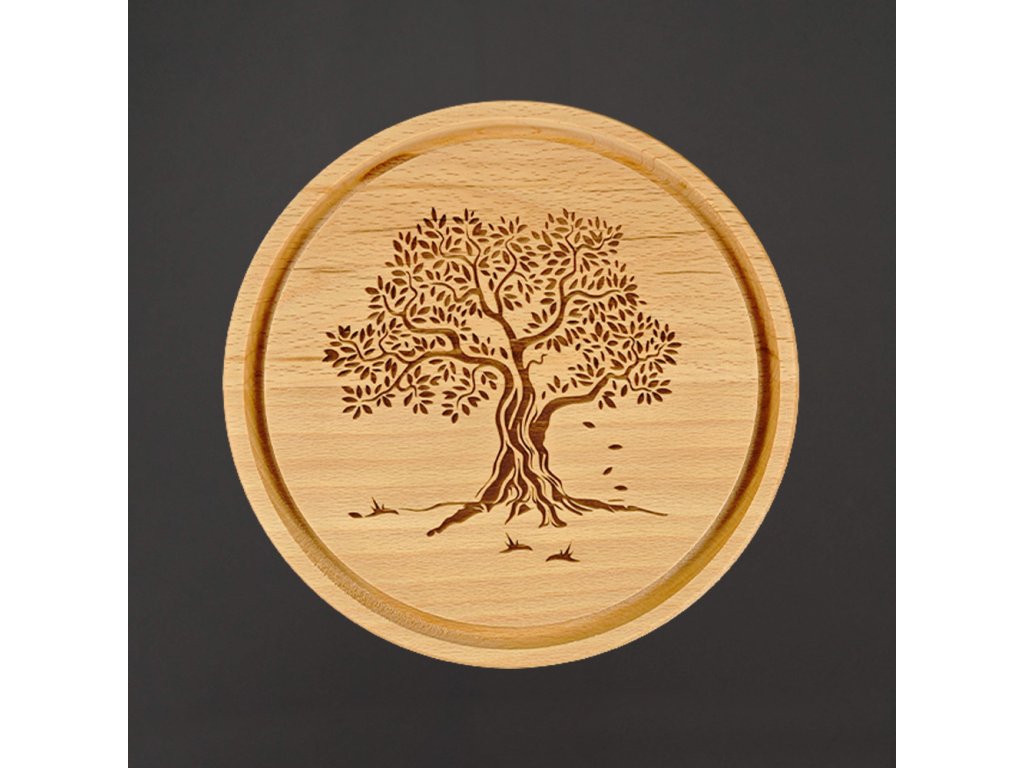


What to do with the decorations afterwards
A St Martin's table has the advantage that it can flow smoothly into Advent. Most of what is on the table – boards, trays, coasters, candle holders – stays the same. Only what surrounds them changes.
In practice, after 11 November you remove the pumpkins and apples, keep the nuts and candle holders, and at the end of the month add fir sprigs and dried orange slices. The transition is gradual and you do not have to bring out the whole Christmas box at once.
We have described the Christmas version of the same table in a separate article on Christmas table settings. The principles remain the same; the colours and materials differ.
Frequently asked questions
Why do people eat goose on St Martin's Day?
The feast falls on 11 November, the end of the farming year. Around this date farmhands were paid, contracts were concluded and poultry that was not worth feeding over winter was slaughtered. The goose was at its plumpest at that time – so the tradition arose for practical reasons, not symbolic ones.
When is St Martin's wine opened?
Traditionally on 11 November at eleven in the morning. It is young wine from this year's harvest, drunk soon after fermentation and not meant for cellaring. It tastes fresher and lighter than longer-maturing wines, which is why it pairs well with richer food.
How should I set the table for a St Martin's feast?
The basis is serving in the middle of the table, from which guests help themselves. Goose or duck on a large wooden board, side dishes in bowls around it, plus low candle holders and natural materials. A formal setting with pre-plated food does not suit this type of feast.
Can I put a hot roast on a wooden board?
Yes, wood copes with the temperature of a roast without problems – that is exactly why meat is traditionally carved on it. But do not put a hot baking tray or a dish straight from the oven on it. And wash the board as soon as possible after the feast, because poultry fat soaks into wood quickly.
What does "Martin on a white horse" mean?
A Czech weather saying that the first snow arrives around 11 November. In practice it comes true roughly once every few years, so it is not a reliable forecast. But it belongs to the feast just as inseparably as goose and young wine.
What from the AMADEA range suits a festive table?
Serving boards, trays and jars, coasters and placemats, napkin holders and wooden candle holders are the most useful. Everything is handmade from native woods in a Czech sheltered workshop.
🌳 A table people want to linger at. Boards, trays, coasters and candle holders made from Czech wood – handmade, piece by piece.
Go to kitchen and diningAuthor: Martin Portych – specialist in wooden products, gift advice and shop content
Editorial policy: Our content is based on the day-to-day practice of the AMADEA shop, the real needs of our customers and a commitment to clear, useful and trustworthy information.