
Glossy wrapping paper, a metallic bow, cellophane and two metres of sticky tape – packaging that survives thirty seconds and then goes into general waste because it cannot be recycled. Yet wrapping gifts without plastic is no sacrifice. Paper with string and a single natural decoration looks better than most of what is sold ready-made.
What you will need. The basis is plain paper – wrapping paper, baking paper or even brown paper torn from a parcel. Add natural string or twine to replace both sticky tape and the bow. For decoration, use whatever you have at home or can find outdoors: a sprig of fir, a dried orange slice, a cinnamon stick, a pine cone, a wooden ornament. And finally a piece of thicker paper for a gift tag. Scissors are the only tool you need.
Step by step
The whole method rests on one change compared with conventional wrapping: the paper is held by string, not sticky tape. Once you have made that switch in your head, the rest follows naturally and the result looks far better.
1. Measure the paper
Place the gift in the middle of the paper and measure the width so that the edges overlap by about three centimetres. Cut off the excess paper – too much is hard to fold and makes the result look puffy.
For flat items such as a board or a notebook, you will need very little. For irregular shapes, such as a candle holder or a lantern, it is easier to put the gift in a box first and wrap that.
2. Wrap without tape
Fold the longer sides over each other and hold them with your finger. Fold the ends inwards like an envelope and fold them up. For now the paper is held only by pressure, which is fine – the string will secure it in a moment.
Run a fingernail or the edge of the scissors along the edges. A crisp, sharp fold is the one thing that distinguishes a carefully wrapped gift from a sloppy one, and it takes no time at all.
3. Tie with string
Wrap the string around the parcel crosswise and pull it tight. Tie the knot on top, where the decoration will hide it. Natural twine holds more reliably than thin ribbon and does not slip.
If you want to be sure, you can secure the paper under the string with a small piece of paper tape. Unlike ordinary clear tape, it is recycled together with the paper.
4. Add one decoration
Tuck a sprig of fir, a dried orange slice, a cinnamon stick or a wooden ornament under the string. Stick to one or two elements – more looks cluttered and contradicts the simplicity of the whole approach.
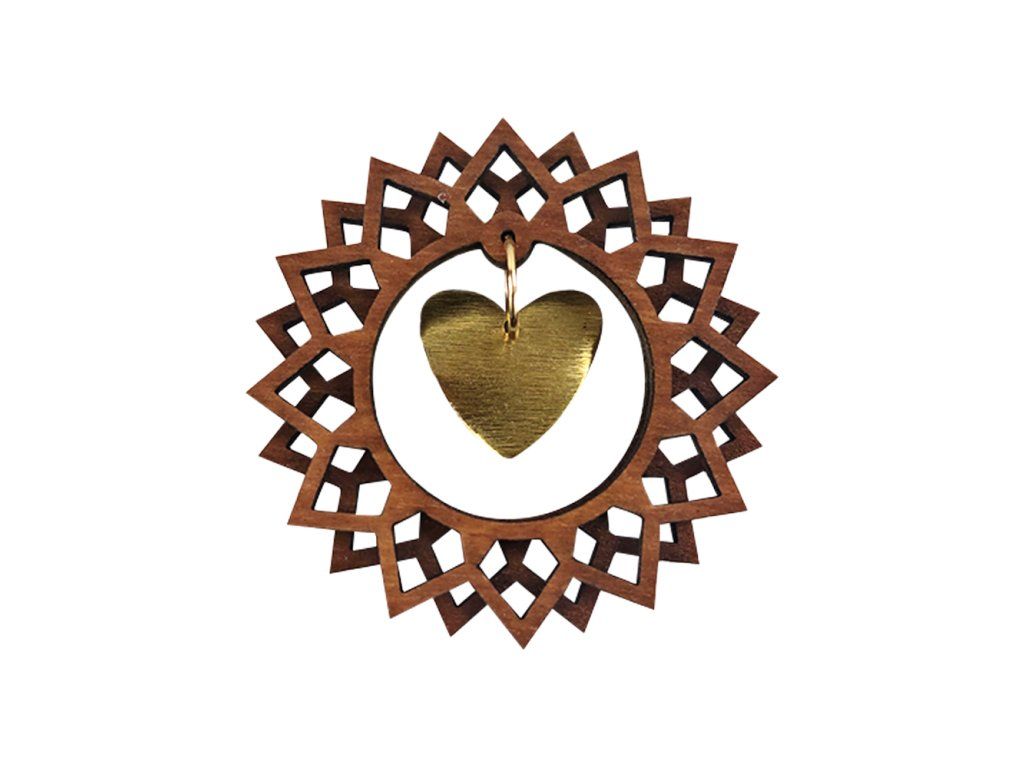
A wooden ornament has the advantage over natural materials that it can be used again. The recipient hangs it on the tree and gets a second small gift from the wrapping. It works better than any bow.
5. Attach a gift tag
Thread a name card onto the string or tuck it under the knot. Write the name by hand – a handwritten tag is a detail people remember, even if they cannot recall what was in the parcel.
Instead of a card you can also use a wooden greeting card, which outlives Christmas and does not end up in the bin with the paper.
Tip for dried orange slices: Cut an orange into slices about half a centimetre thick, pat them dry with kitchen paper and spread them on a baking tray. Dry them in the oven at the lowest temperature for several hours with the door slightly open, turning them occasionally. The finished slices are firm and not sticky. They last several seasons and, as well as for wrapping, are lovely on the tree or in a lantern.
What to use instead of the usual materials
Most of what is sold as Christmas wrapping contains plastic – sometimes visibly, sometimes as a thin layer on the paper. The following overview shows what you can replace common materials with.
| Instead of | Use | Why |
|---|---|---|
| Glossy wrapping paper | Plain or baking paper | Recyclable, its colour suits wood |
| Sticky tape | String or twine | Holds better and works as decoration |
| Artificial bow | A natural item or wooden ornament | Can be used again |
| Cellophane | A wooden box | Remains useful to the recipient |
| Plastic gift tag | A paper card or wooden greeting card | Handwritten text carries more weight |
| Packing peanuts | Crumpled paper or wood shavings | Protect just as well and go in the paper recycling |
Beware of papers that look like paper. Glossy, metallic and laminated wrapping papers have a layer of plastic or foil and do not belong in paper recycling, even though they look as if they do. A rough test: scrunch a piece in your hand. If it stays scrunched, it is probably pure paper. If it springs back into its original shape, it contains plastic. Glitter paper does not belong with paper. The test is only a guide, though – sorting rules vary between municipalities, so if in doubt, follow your local collection guidelines.
How to wrap specific shapes
A board or notebook. The simplest case. Just wrap the flat item in paper like a book, tie it crosswise with string and add a decoration. Use less paper rather than more – with flat shapes the excess puffs up and the result loses its sharp edges.
Jewellery. A dedicated box or pouch is almost essential for jewellery, because a small item gets lost in paper and is easily damaged. Best of all is a wooden box, which can keep the jewellery even after the holidays.
A bowl or candle holder. Irregular and more fragile shapes need padding. Crumpled paper or wood shavings work just as well as plastic peanuts, but can go into paper recycling or the compost.
Several small items together. Instead of wrapping each one separately, arrange them in a single crate lined with paper or fabric. It looks more thoughtful than a pile of small parcels, and the crate can be used again.
When you do not want to wrap at all
The most sustainable packaging is the one that does not exist. With wooden gifts this is easier than with anything else, because the product itself is beautiful and does not need hiding.
A wooden gift box is the most elegant solution here. It serves as packaging, is part of the gift and stays with the recipient for small items, jewellery or office supplies. Just tie it with string and add a tag.
The second option is fabric wrapping – a scarf, a tea towel or a piece of linen tied in the Japanese furoshiki style. The fabric is a gift in itself and can be reused endlessly. It has not caught on much in Czech households yet, but it works brilliantly for bulkier gifts.
What is useful for wrapping


How long it takes
The most common objection to plastic-free wrapping is that it takes longer. For someone inexperienced, the first parcel may take five minutes and the fifth two – roughly the same as with sticky tape, just without hunting for the end of the roll.
What really takes time is preparing the decorations. Drying oranges takes one afternoon, but the slices last several seasons, so you only need to do it once every few years. Fir sprigs and pine cones can be gathered on a single walk.
I recommend getting everything ready in one place beforehand – paper, string, scissors, decorations, cards – and wrapping in one batch while watching a film. Wrapping one piece at a time between other chores is what drags the whole process out.
Frequently asked questions
Is ordinary wrapping paper recyclable?
It depends on the type. Pure paper is recyclable, but glossy, metallic and laminated papers have a layer of plastic and do not belong in paper recycling. A simple test: scrunch the paper in your hand. If it stays scrunched, it is pure paper. If it springs back, it contains plastic.
What can I use instead of sticky tape?
The simplest replacement is string or twine wrapped crosswise around the parcel. It holds reliably and also works as decoration. If you do need tape, there are paper versions with adhesive that are recycled together with the paper.
How do I dry orange slices for decoration?
Cut an orange into slices about half a centimetre thick, pat them dry with kitchen paper and spread them on a baking tray. Dry them in the oven at the lowest temperature for several hours with the door slightly open, turning them occasionally. The finished slices are firm and not sticky.
Does a gift need wrapping if it is in a wooden box?
No, and it is often better if it is not. A wooden box is part of the gift in itself, and extra wrapping only hides it. Just tie it with string and add a tag – and the recipient gets to keep the box for further use.
How do I wrap an irregular shape?
Put it in a box first and wrap that. Trying to wrap a candle holder or lantern in paper ends in a crumpled result. Another option is fabric wrapping, which adapts to an irregular shape by itself.
Which AMADEA products are useful for wrapping?
Above all wooden gift boxes, small ornaments that replace a bow, and wooden greeting cards instead of paper cards. We make everything by hand from Czech wood in our sheltered workshop.
🌳 Packaging that does not get thrown away. Wooden boxes, ornaments and greeting cards from a Czech sheltered workshop – wrapping that is part of the gift.
Browse gift boxesAuthor: Martin Portych – specialist in wooden products, gift advice and shop content
Editorial policy: Our content is based on the day-to-day practice of the AMADEA shop, the real needs of our customers and a commitment to clear, useful and trustworthy information.