
The question of which oil to use on wood in the kitchen has a surprisingly simple answer – and one big trap. The trap is reaching into the pantry for olive oil. After a few weeks on a chopping board it turns rancid and the wood starts to smell. This article compares three groups of oils that really do belong in the kitchen.
Before you start. Find out two things. First, whether the product is labelled as food-safe – this is a non-negotiable condition for anything you cut on or eat from. Second, whether it is a drying or a non-drying oil. That decides whether the surface hardens or stays greasy. Apart from the oil itself, all you need is a cotton cloth and a little patience.
Drying or non-drying? This is what decides
All wood oils are divided by one property: their ability to oxidise in the air and form a solid layer. The technical term is polymerisation; in practice you can tell because the surface stops feeling greasy after a while.
Drying oils – typically linseed and tung oil – react with oxygen in the air and form a hard, durable structure inside the wood. They protect for a long time but need time to cure, in the case of linseed oil easily several days.
Non-drying oils – mineral oil and kitchen oils from the pantry – never polymerise. Mineral oil is chemically stable, so although it never dries, it never goes rancid either, which is why it has long been used on chopping boards. Sunflower or olive oil, on the other hand, oxidises into rancid compounds with a typical smell. That is exactly why they don't belong on kitchen wood, however natural it may sound.
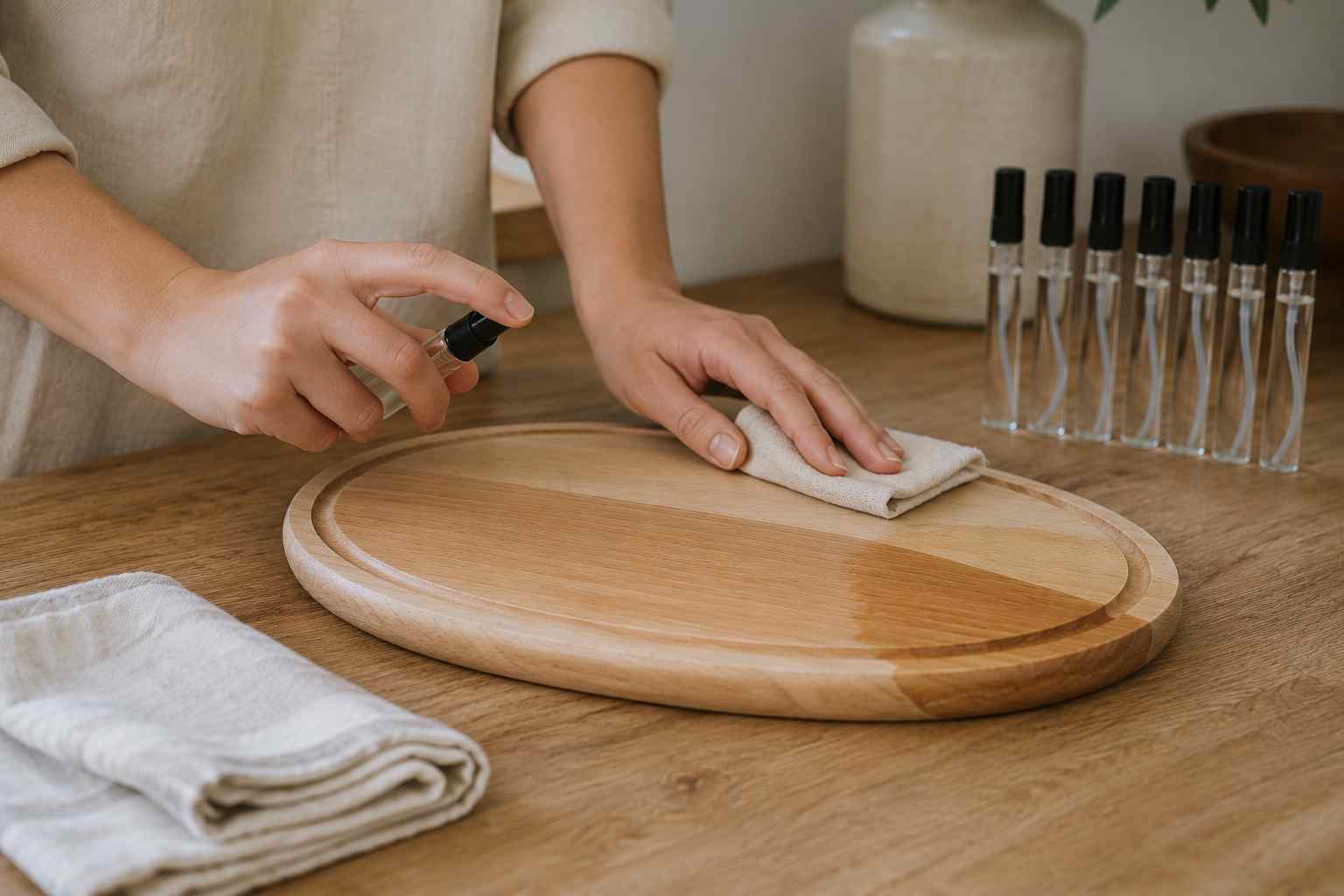
Three oils that suit the kitchen
Linseed oil: the traditional choice with one catch
Linseed oil has been used on wood in the Czech lands for generations – joiners in the Bohemian-Moravian Highlands and woodcarvers in Wallachia knew it long before anything more modern existed. It penetrates the fibres well, is durable once cured and gives the wood a warm honey tone that looks superb on oak and beech.
One caveat about linseed oil has to be mentioned, though. It only protects reliably once it is fully cured. If it is applied too thickly, the excess is not wiped off or the board is used too soon, the uncured oil in the wood may start to smell over time. That is why some woodworkers prefer mineral oil for kitchen wood, as it carries no such risk.
The second catch is in the naming. Pure cold-pressed linseed oil is fine for the kitchen, but it dries slowly – one coat can easily take two to three days. That is why boiled linseed oil is also commonly sold – linseed oil with added driers that speed up drying. Driers, however, are metal salts and don't belong on a board you eat from. You can only tell the difference from the label, so read it.
Safety warning about linseed oil. Rags soaked in linseed oil heat up as they dry and, when crumpled, can spontaneously combust. Never leave them in a heap in the bin. Spread the used cloth out on a non-flammable surface outdoors, let it dry completely and only then throw it away. Alternatively, submerge it in water in a closed container.
Tung oil: the most durable finish
Tung oil is pressed from the seeds of the tung tree, whose fruits are known as tung nuts. Anyone dealing with a nut allergy at home should take this into account and possibly choose another product. Of the drying oils, tung oil is the hardest. It creates a surface that resists water better than linseed, doesn't darken as much and dries faster – one coat in about a day.
You pay more for it and have to watch the purity of the product. Blends with solvents and resins intended for furniture, not for the kitchen, are often sold as "tung oil". Look for the label pure or 100 %. For bowls and plates that come into contact with moist food, it is a very good choice.
Mineral oil: the easiest to use
If you can't decide between the three options and want to start simply, this is the safe choice. You can't go wrong, you will see the result straight away and you can switch to drying oils at any time later.
Food-grade mineral oil – called "paraffin oil" in older literature – is colourless, odourless and chemically inert. It never dries hard, so it has to be applied more often, but it never goes rancid either. That is why professional kitchens commonly use it on chopping boards.
It is the easiest of the three to apply, soaks in within an hour and you can use the board almost immediately. The downside is weaker long-term protection – repeated contact with water gradually washes it out. If you cook every day, expect to oil once every three to four weeks.
🌳 Need oil as well as a board? In our accessories for wooden products you will find products intended for wood that comes into contact with food.
View accessoriesComparison in one table
If you want to choose quickly, here are the three oils side by side. The fourth column deliberately also shows what doesn't belong in the kitchen – for comparison.
| Property | Linseed (pure) | Tung | Mineral | Olive oil from the pantry |
|---|---|---|---|---|
| Drying oil | Yes | Yes | No | No |
| Drying time | 2 to 3 days | About 1 day | Does not dry | Does not dry |
| Goes rancid? | Not once cured | Not once cured | No | Yes |
| Darkening of wood | Significant | Slight | Minimal | Uneven |
| Water resistance | High | Highest | Medium | Low |
| How often to oil | Once every 2 months | Once every 2 months | Once every 3 weeks | Do not use |
| Suitable for the kitchen | Yes, without driers | Yes, pure | Yes, food-grade | No |
How to apply oil correctly
The method is the same for all three oils; only the waiting time differs. The board must be clean and completely dry – oil on damp wood seals the moisture in and does more harm than good. So after washing, wait at least a few hours.
Apply a thin layer with a cotton cloth and spread it over the whole surface, including the edges and end grain. End grain absorbs the most because the fibres are open there – and that is exactly where cracks begin. Let the oil soak in and then wipe off the excess thoroughly. Any layer left sitting on the surface won't dry and will just smear.
With a new board, repeat three to four times at weekly intervals until the fibres are saturated. Then switch to your normal routine. We have described the whole process of washing, drying and maintenance in a separate guide on how to care for a wooden chopping board.
Tip from the workshop: Oil soaks in better if you warm it slightly before applying – just stand the bottle in a mug of warm water for ten minutes. Thinner oil penetrates deeper and you use less of it. But never heat it directly on the hob.
How much oil will you actually use?
A common worry is that oiling will be expensive. It isn't. One ordinary chopping board takes roughly a tablespoon of oil per treatment, and a saturated piece even less. A small bottle can easily last two years in a normal household.
Expect higher consumption only at the beginning, when new wood absorbs more, and after sanding, when the surface opens up again. Spread over a year, maintaining a board costs just a few euros – and extends its life by years.
What to oil besides the chopping board
All wood that meets moisture in the kitchen will appreciate the same care. Wooden spoons and spatulas from our kitchen utensils range have it even harder than chopping boards, because they are dipped into hot food. Oiled utensils don't absorb fat and don't turn grey.
Wooden bowls, plates and trays need oil mainly on the inside, where contact with food is most intense. And don't forget coasters and placemats – rings from glasses appear exactly where the protective layer is missing.


Frequently asked questions
Can I use olive or sunflower oil on a wooden chopping board?
We don't recommend it. Kitchen oils from the pantry are non-drying; they don't polymerise in the wood and start to go rancid after a few weeks. The board then smells and feels sticky. Use an oil intended specifically for wood in contact with food.
What is the difference between wood oil and wood wax?
Oil penetrates the fibres and protects the wood from within; wax stays on the surface and creates a thin water-repellent layer. The best results come from combining them: first two or three coats of oil, then, once absorbed and dry, a thin layer of wax.
How many coats of oil should a new board get?
Saturate a new board with three to four coats during the first month, ideally once a week. Let each coat soak in and wipe off the excess. Then switch to the normal routine of once every four to six weeks.
Is linseed oil safe for contact with food?
Yes, if it is pure cold-pressed linseed oil without driers. Boiled linseed oil, i.e. linseed oil with added driers, doesn't belong on kitchen wood. Always check the label to make sure the product is intended for food contact.
How can I tell that a board needs oil?
Put a drop of water on it. If it stays as a bead, the protective layer is working. If it spreads and the wood underneath darkens, it is time to oil. Another sign is a lighter, duller surface that feels drier to the touch.
Do you sell wood oils too?
Yes, in the accessories for wooden products category you will find products suitable for maintaining chopping boards, bowls and kitchen utensils from our workshop. These are oils intended for wood in contact with food.
🌳 Honest wood deserves honest care. Chopping boards, bowls and utensils from a Czech sheltered workshop – along with products for their maintenance.
Go to Kitchen and DiningAuthor: Martin Portych – specialist in wooden products, gift advice and shop content
Editorial policy: Our content is based on the day-to-day practice of the AMADEA shop, the real needs of our customers and a commitment to clear, useful and trustworthy information.